Knapweed Ghost
(Acanthiophilus helianthi)
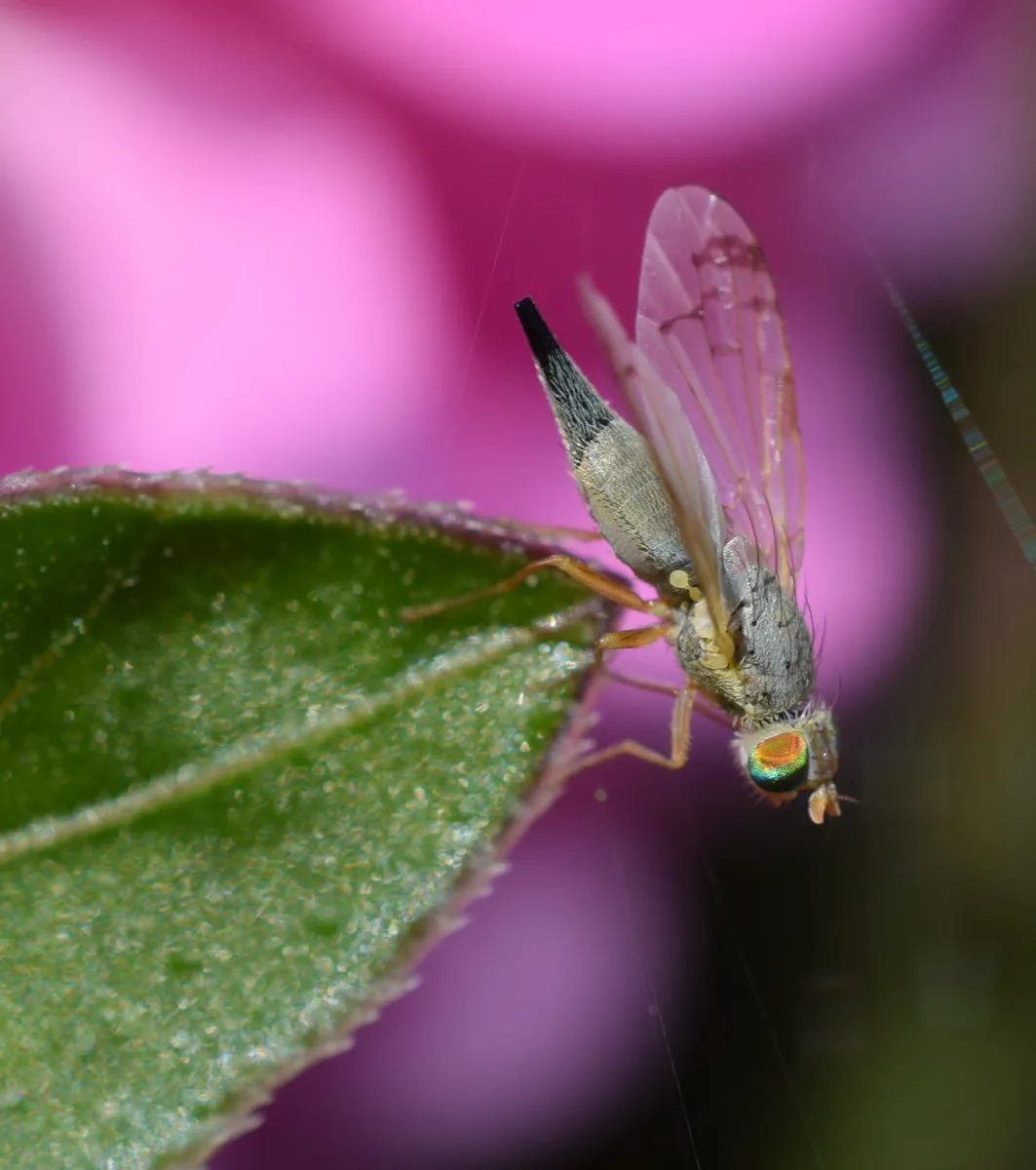
Welcome to the Wildlife Wanderer species identification guide. This factfile covers the Knapweed Ghost (Acanthiophilus helianthi), a striking, small picture-winged fly found locally across the UK known for its brilliant green eyes and distinct black dots dusting its grey thorax.
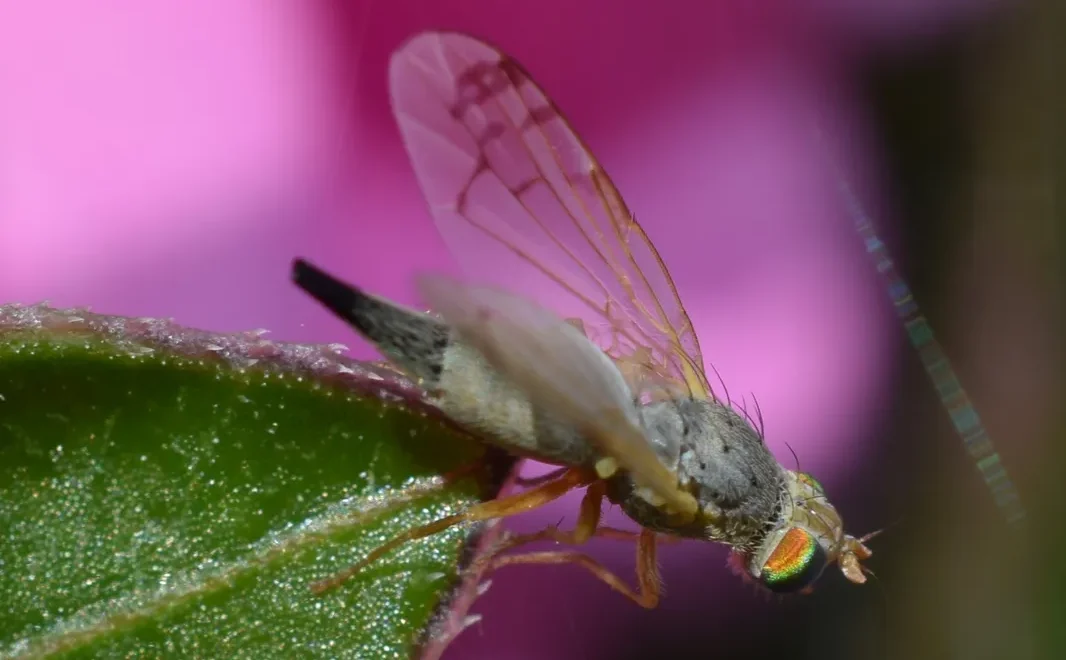
A Knapweed Ghost (Acanthiophilus helianthi) with its large green eyes and tapering ovipositor sheath.
Habitat & Distribution
- Diet: The larvae feed internally on developing seeds and flower buds inside the flower heads of knapweeds, safflowers, and thistles. Adult flies sustain themselves on sugary fluids, primarily consuming flower nectar and plant sap.
- Habitat: The Knapweed Ghost can be found in many settings, specifically around knapweed, musk thistle and safflower.
- Distribution: Europe, north and east Africa, the Middle East and parts of Asia.
- UK Distribution: Mostly southern England, however, it has recently been identified in Scotland.
- Rarity: Uncommon.
Physical Description & Identification Keys
- Size: Approximately 4-5mm long.
- Description: Appears silver-grey in colour with a black, elongated tip to the abdomen in females (ovipositor shield). The grey-brown thorax features dark bristles and two dark spots on the scutellum. The legs are a pale yellow-brown colour, and the large eyes are bright green. The wings are mostly clear, with a dark pattern concentrated heavily around the wing tip apex.
Field Notes and Experiences
The Knapweed Ghost first appeared to me in my father-in-law's garden in Filton. At the time I was unaware of its significance, simply thinking it was just another fly. It was only a week later when I encountered another in my parents garden, roughly six miles away, and on investigation I realised they were actually an uncommon species, and very photogenic! Both specimens seemed calm and were happy to sit for photographs.
Knapweed Ghost Similar Species Comparison
Distinguishing Features: At a glance, there are many similar species, such as the Knapweed Picture-winged fly (Urophora quadrifasciata), Tephritis formosa and Trypetoptera punctuata, however, all of these species can be easily identified by the type of patternation on the wings. The Knapweed Picture-winged Fly also has clear wings with broad dark bands and a dark thorax. At a 1:1 ratio, this species is easily identifiable.