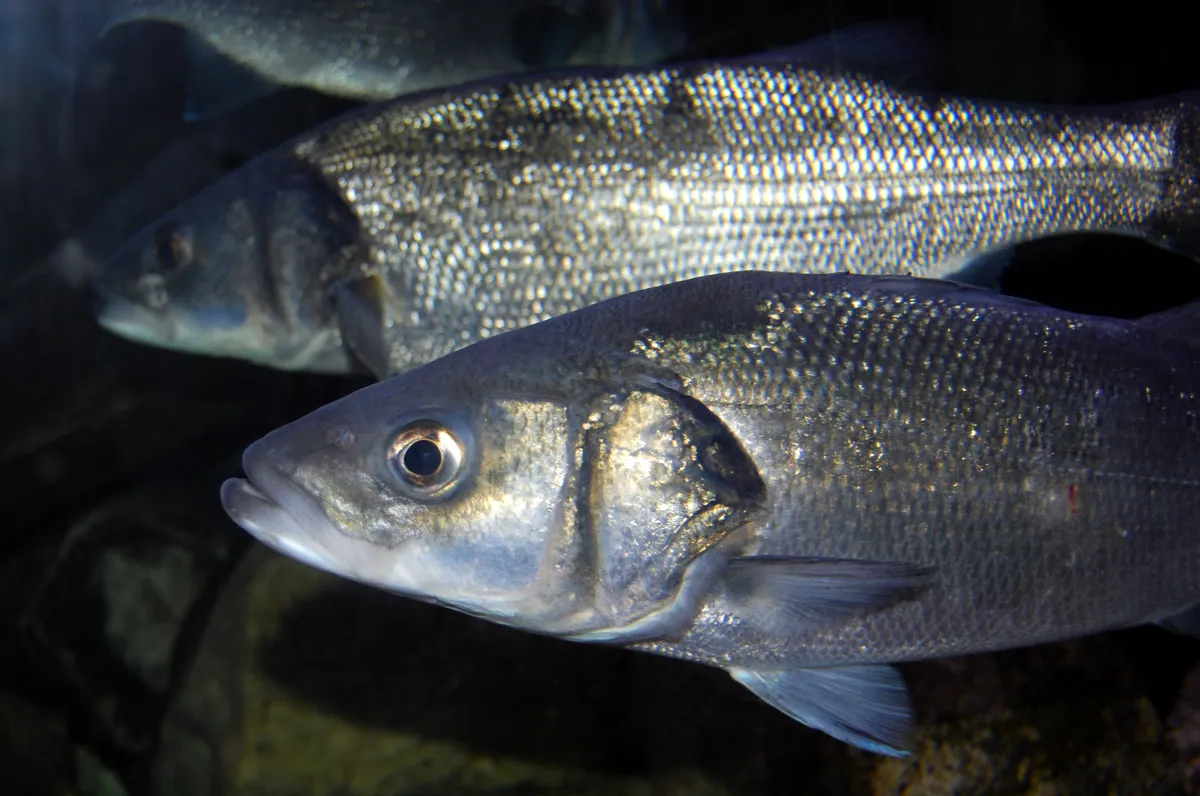
European Seabass
(Dicentrarchus labrax)
Welcome to the Wildlife Wanderer species identification guide. This factfile covers the European Seabass (Dicentrarchus labrax), a sleek marine fish found across UK coastal waters. It is widely known for its silvery flanks, spiny double dorsal fins, and status as a prized predatory species.
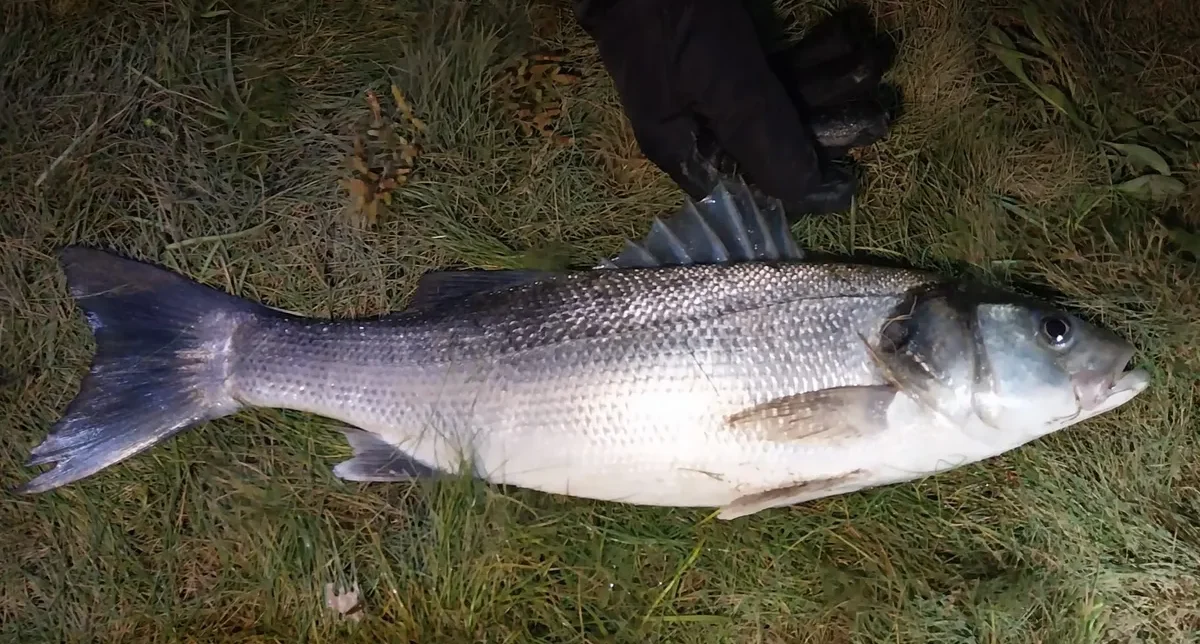
European Seabass (Dicentrarchus labrax) caught and released. Photo courtesy of Tristan Bawn at UK-Active Outdoors.
Habitat & Distribution
- Diet: An opportunistic predatory hunter. Juveniles feed mainly on small crustaceans (such as prawns and crabs) and marine invertebrates, while adults prey heavily on small schooling fish like sandeels, herring, and sprat.
- Habitat: Shallow coastal waters, rocky reefs, surf zones, and estuaries (often entering tidal rivers).
- Distribution: Across the Eastern Atlantic (from Norway to West Africa) and throughout the Mediterranean and Black Seas.
- UK Distribution: Common all around the UK coast, especially along the southern and western shores of England, Wales, and Ireland.
- Rarity: Common.
Physical Description & Identification Keys
Size: 30-70cm (can reach up to 1m).
Description: Sleek, elongated body with a broad head and silvery-grey sides fading to a white belly. It features two distinct dorsal fins—the first spiny and the second soft-rayed—along with a dark spot near the top edge of the gill cover. The body is covered in fine scales, and adults often show a subtle bluish-grey or dark metallic sheen along the back.
Field Notes and Experiences
I have only ever seen this species in captivity. It is a species that I can identify with, as ever since I met my wife that was her pet nicname for me - SeaBass. My brother, a keen angler, has caught many Seabass and has always been happy to share the images in the spirit of education.
There are no subspecies, but their are two distinct populations. One inhabits the northeast Atlantic Ocean, and the other is in the western Mediterranean Sea. This species is revered in many cultures as a fine fish dish; Loup de mer in France, Robalo in Spain and Portugal, and Spigola in Italy.
European Seabass Similar Species Comparison
Distinguishing Features: The European Seabass is most commonly confused in UK waters with the Thicklip Grey Mullet (Chelon labrosus) . Both species share silvery scales and frequent the same coastal and estuarine habitats. However, adults are easily distinguished by their head and mouth shape. The European Seabass features a pointed head with a large, tooth-bearing mouth. In contrast, the Thicklip Grey Mullet has a blunt head, a small mouth, and a noticeably thick, rubbery upper lip. They also differ in their fins and markings. The European Seabass has a prominent, continuous lateral line along its flank. Its first dorsal fin is equipped with 8 to 10 sharp, rigid spines. The Thicklip Grey Mullet lacks a visible lateral line entirely and possesses a small first dorsal fin with only 4 short spines.
Colour Forms:
- Leucism & Albinism — Extremely rare color mutations documented in captive/aquaculture stocks; not established as wild color morphs