European Robin
(Erithacus rubecula)
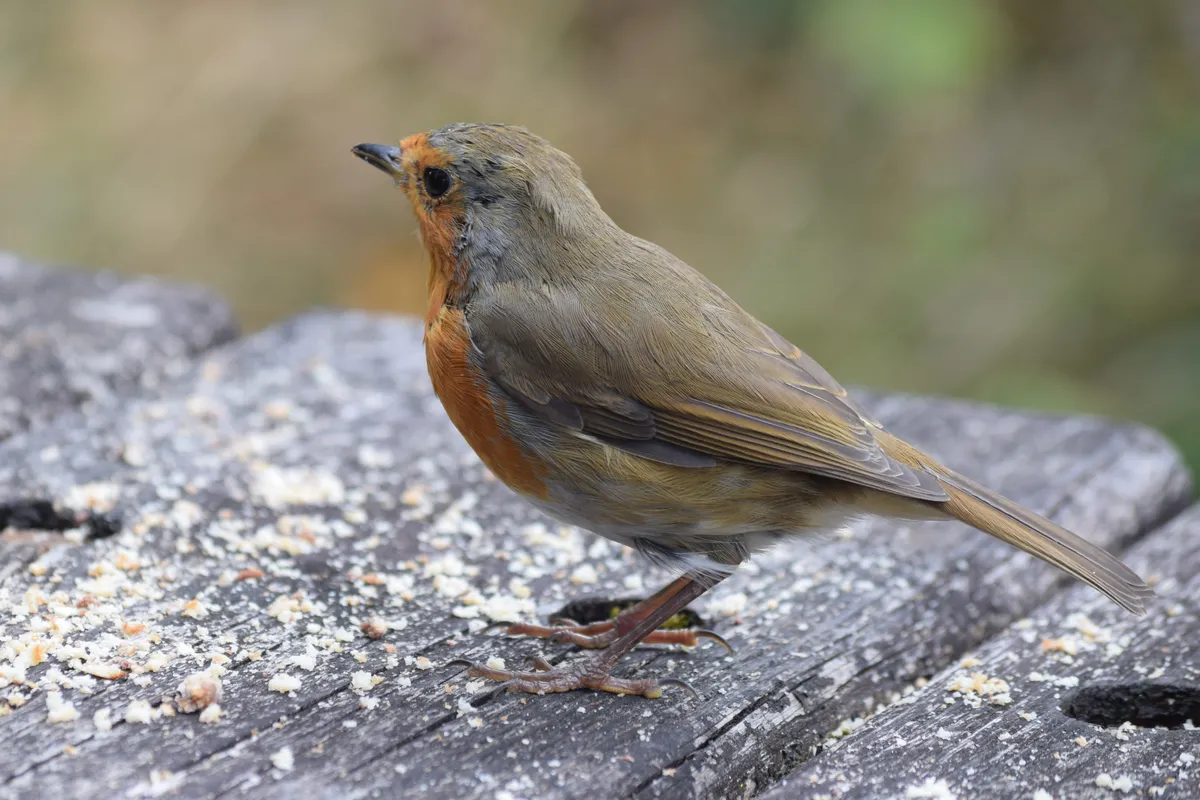
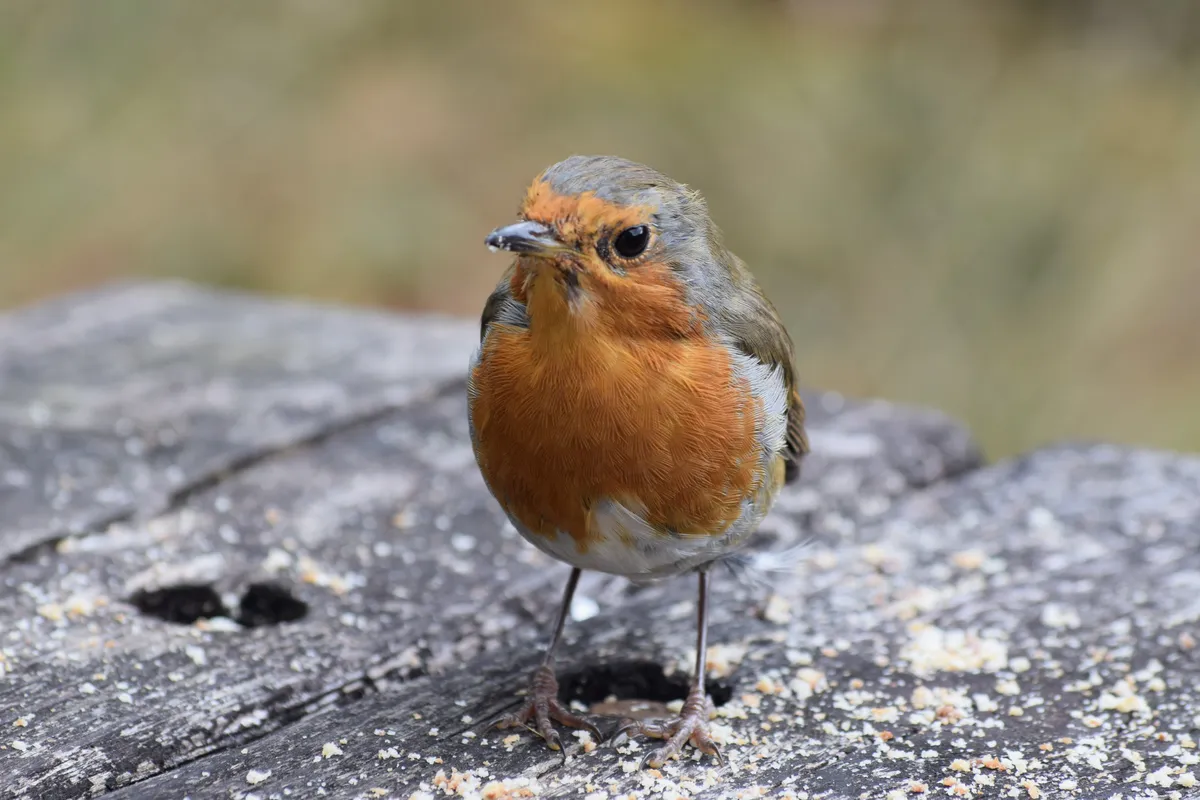
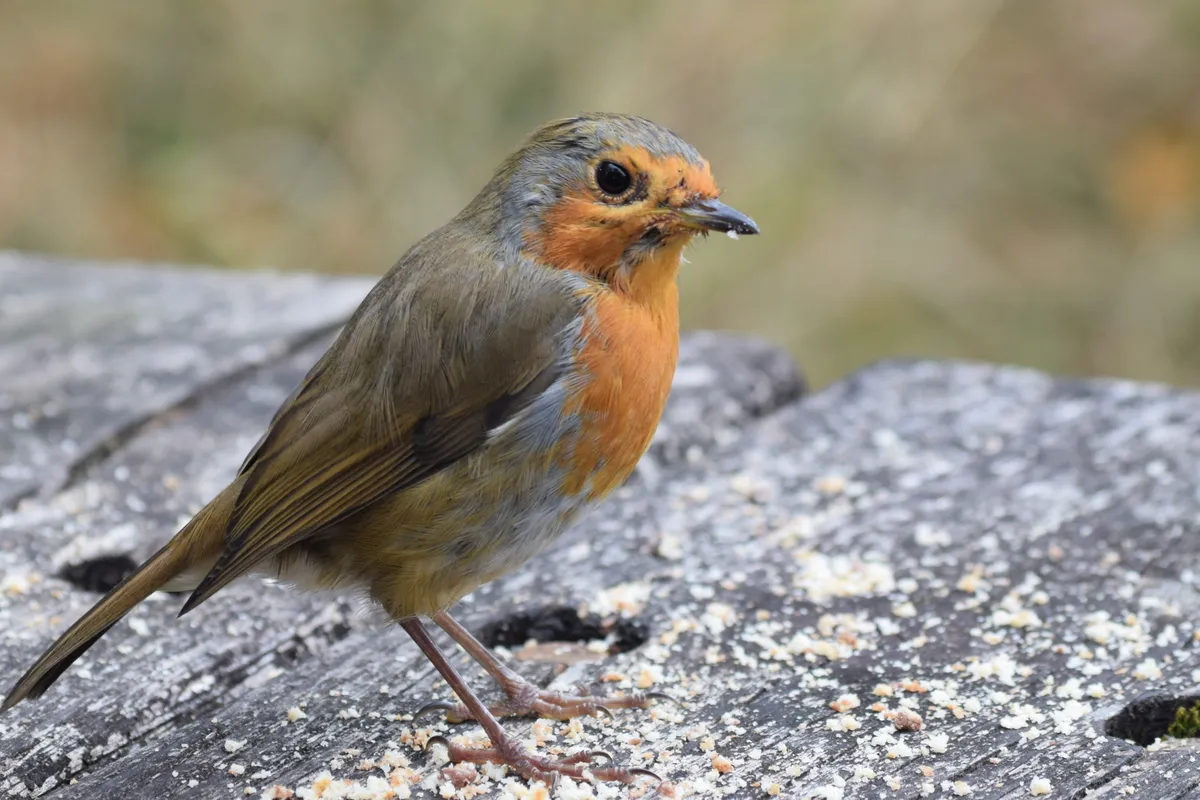
Welcome to the Wildlife Wanderer species identification guide. This factfile covers the European Robin (Erithacus rubecula), a striking, plump songbird found across the UK known for its large dark eyes, olive-brown plumage, and iconic bright orange-red breast.
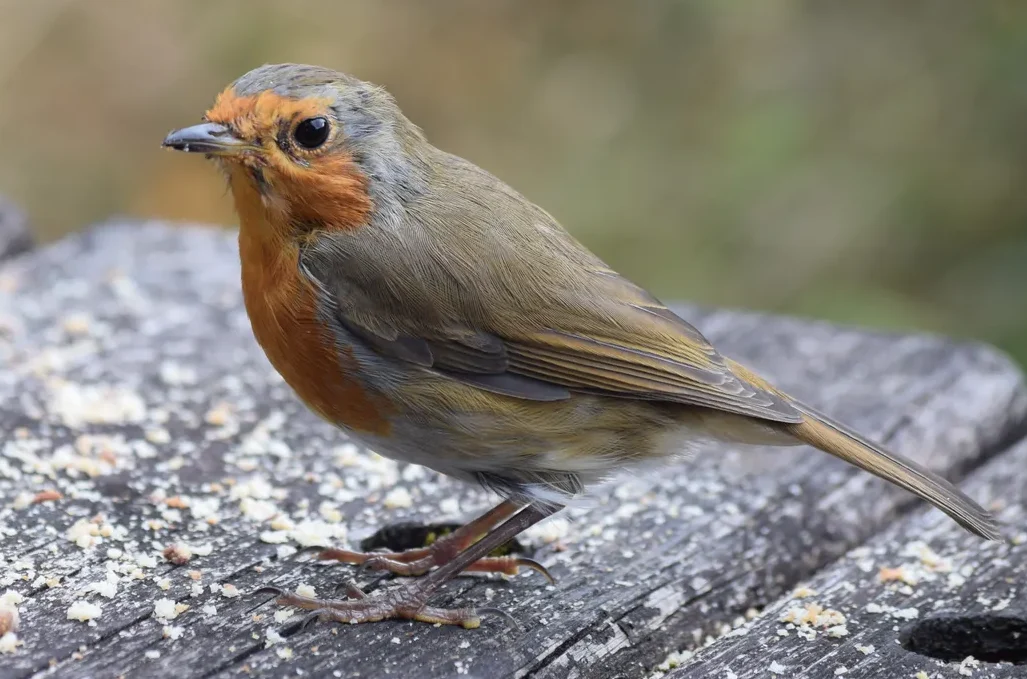
A European robin (Erithacus rubecula) showing its bright red breast.
Habitat & Distribution
- Diet: An omnivore, its diet primarily consists of insects and invertebrates—like beetles, worms, caterpillars, and spiders—supplemented by berries and seeds during the autumn and winter months.
- Habitat: Forests, parks, woodlands, hedgerows, fields and gardens.
- Distribution: Europe, North Africa, and western Asia.
- UK Distribution: Found throughout the UK.
- Rarity: Common.
Physical Description & Identification Keys
- Size: 12.5-14cm long with a 20-22cm wingspan.
- Description: The European Robin has a mid-brown crown (top of head), nape, back and wings. The lower chest is whitish turning to a white-cream on the underbelly. The face, chin and upper breast is red-orange (sometimes extending onto the lower breast). The bill is short, sharp and dark in colour. On close inspection there is a greyish line from the top of the eye, around the cheeks and down to the wing base.
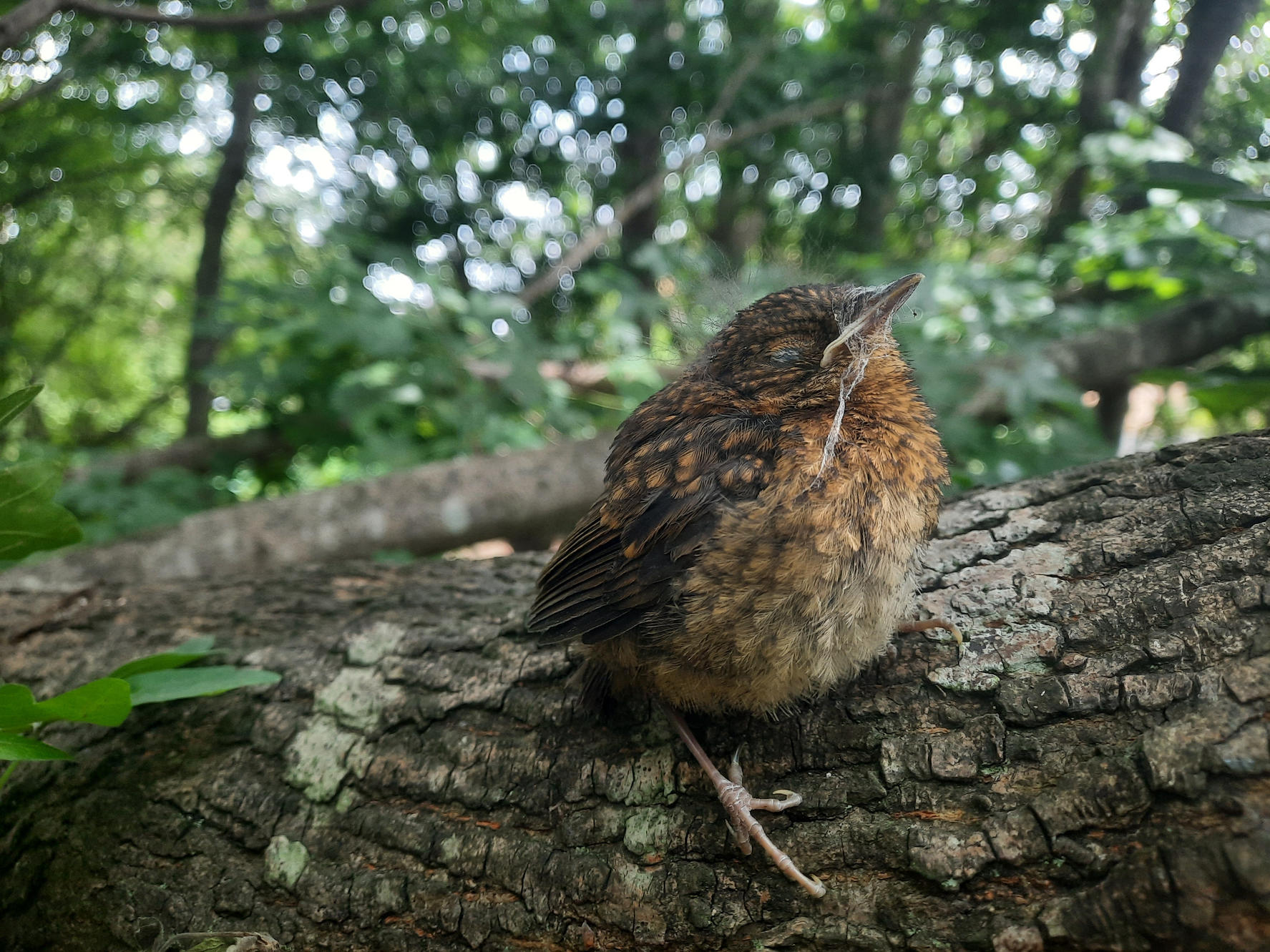
- Juveniles are usually olive-brown with darker mottling and speckling. They lack the famous red breast.
Field Notes and Experiences
I grew up with Robins, they were everywhere. As my mother was a keen gardener and tended her vegetable and fruit gardens we met many during childhood. Known as the 'Gardener's friend' it was easy to see why. As soon as we turned the soil, a Robin would zip down and pinch the unearthed worms and larvae. While working in Stoke Gifford I remember turning over a concrete lintel to find a small lace-weaver, as I turned to grab my camera, a Robin flew down, grabbed the arachnid, and flew away.
I have always found them bold and quite tame, and they are always the main species to stand their ground until the last minute. As kids, we knew them as Robin Redbreasts, the same way we knew Jenny Wrens and Tom Tits. I have never had the chance to handfeed them, something I know is easy to train them.
When alarmed, the Robin lets out a high-pitched tick-tick sound, it blurts it repeatedly like a submachine gun. They are known to be very territorial.
There are nine subspecies of the European Robin, with the British population recognised as Erithacus rubecula melophilus. The two subspecies in the Gran Canaria and Tenerife (Erithacus rubecula marionae and Erithacus rubecula superbus respectively) are considered by many to be distinct species.
The Robin is synonymous with Christmas. This is in part due to the lore that when Jesus was on the cross, a Robin (overall brown in colour) landed on his shoulder and sang in his ear to ease his suffering, staining its breast with blood in the process.
Recognised Subspecies
- Caucasian Robin (E. r. caucasicus)
- Hyrcanian Robin (E. r. hyrcanus)
- Gran canaria Robin (E. r. marionae)
- (E. r. microrhynchos)
- British Robin (E. r. melophilus) - UK
- European Robin (E. r. rubecula)
- Tenerife Robin (E. r. superbus)
- West Siberian Robin (E. r. tataricus)
- Crimean Robin (E. r. valens)
- North African Robin (E. r. witherbyi)
The subspecies differ mainly in size and weight, mantle colour, wingtip whiteness, and leg colour.
European Robin Similar Species Comparison
Distinguishing Features: While adult European Robins are entirely unmistakable in the UK, the spotted brown juveniles can occasionally be confused with juvenile Dunnocks (Prunella modularis). The juvenile Dunnock features dark stripes rather than spots, and is also slimmer with a thinner bill.
Colour Forms:
- Albinism — Pure white plumage with red/pink eyes
- Brown (Dilution) — Pale grayish-brown plumage replacing dark brown tones
- Leucism — White patches or mostly white plumage with dark eyes
- Melanism — Unusually dark brown or blackish plumage