Common Earwig
(Forficula auricularia-dentata)
Welcome to the Wildlife Wanderer species identification guide. This factfile covers the Common Earwig (Forficula auricularia-dentata), a striking, elongated insect found across the UK known for its flattened reddish-brown body and the prominent, hoop-like forceps tipping its abdomen.
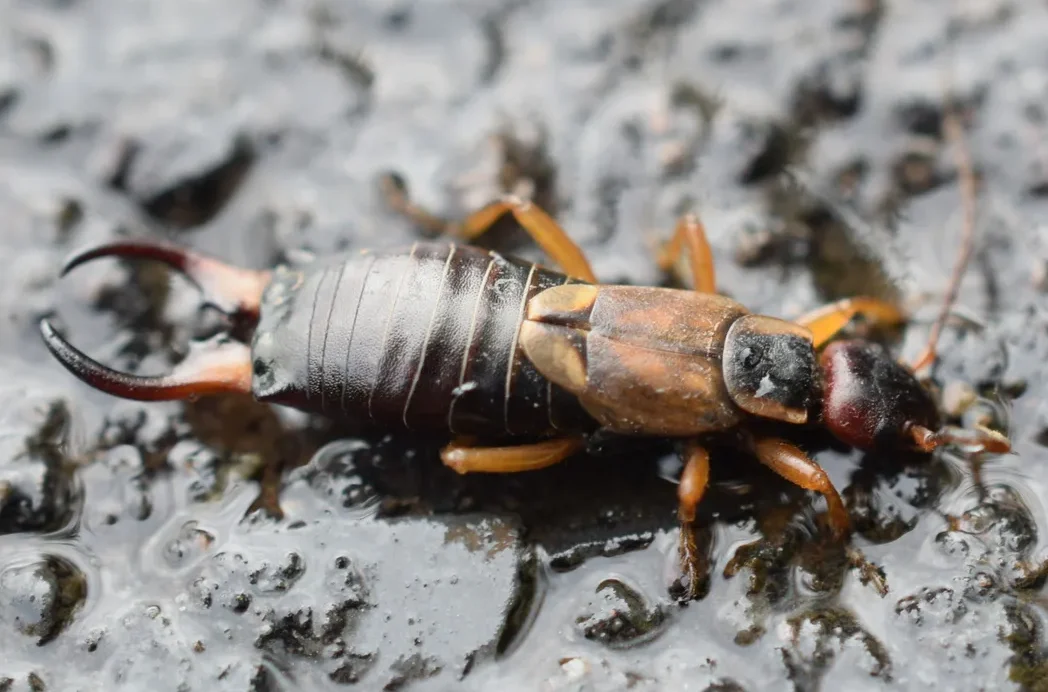
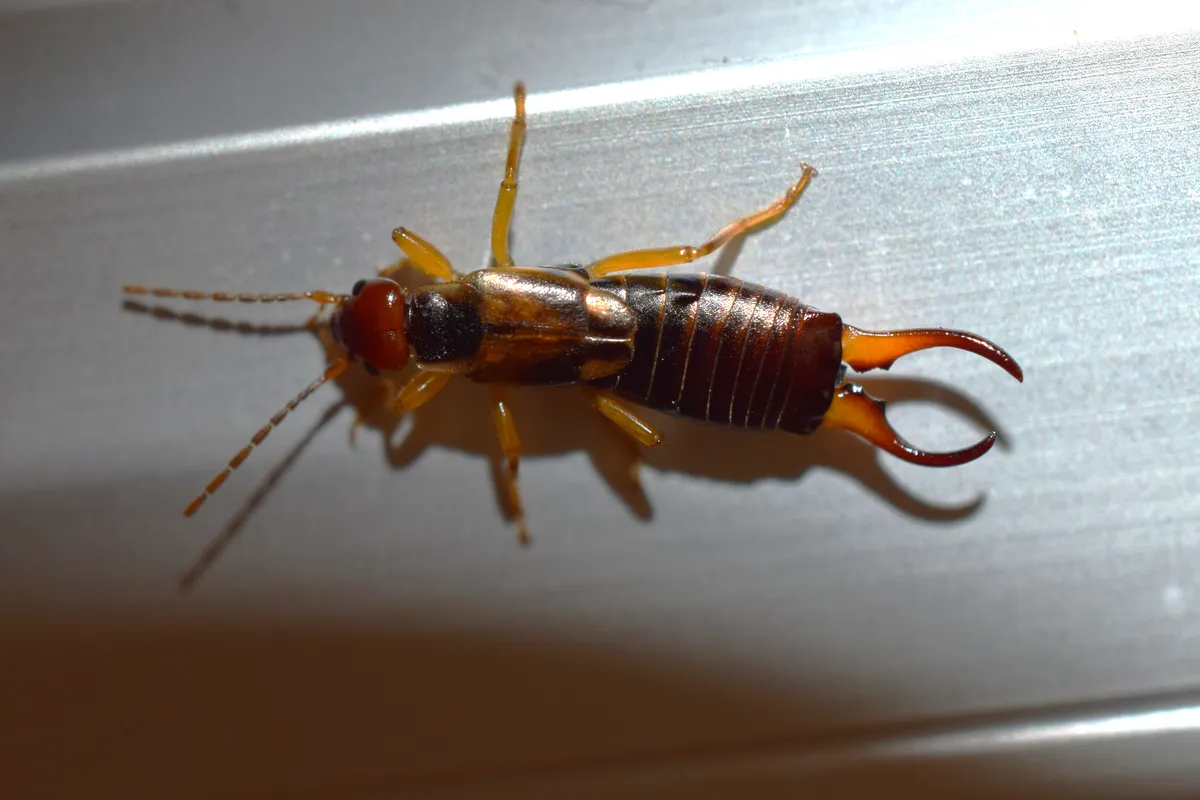
A male Common Earwig displaying large pincers on wet asphalt.
Habitat & Distribution
- Diet: An omnivorous scavenger. It eats a diverse diet of decaying plant matter, leaves, flowers, and fruits, alongside smaller insects like aphids, mites, and insect eggs.
- Habitat: Forests, parks and gardens; almost anywhere that is cool and moist.
- Distribution: Cosmopolitan, except areas of extreme hot or cold.
- UK Distribution: Found throughout the UK.
- Rarity: Common.
Physical Description & Identification Keys
- Size: 12-18mm long.
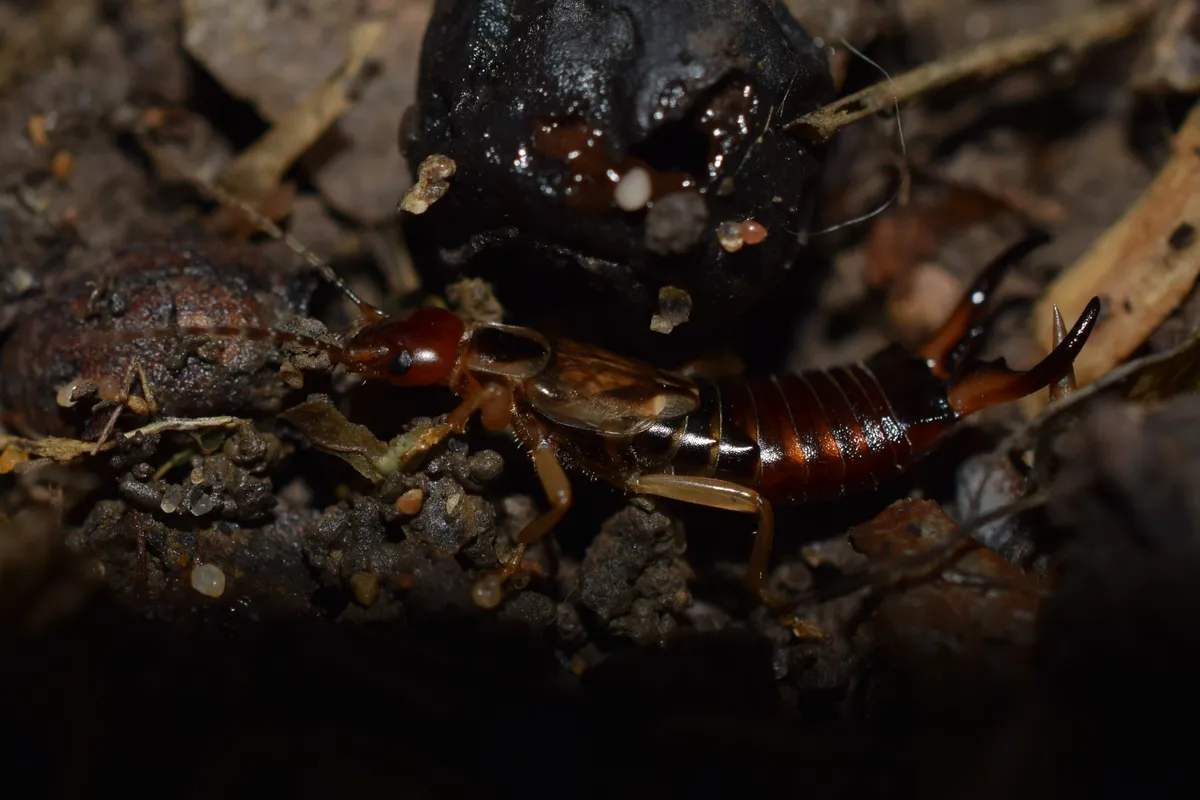
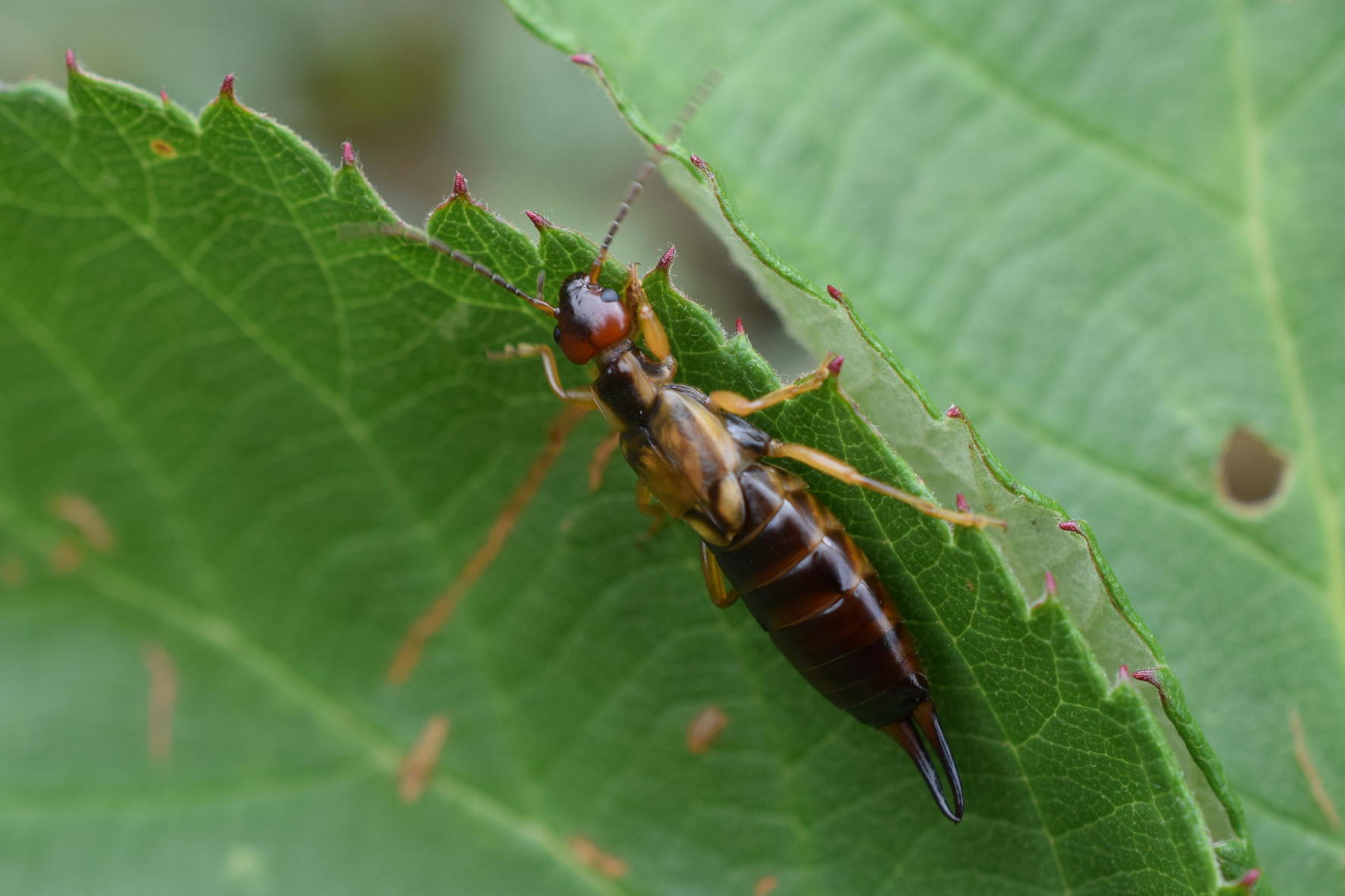
- Description: The head is a rich red-brown with brown antennae. It has a dark thorax with visible golden leathery forewings which act as a hardened case to protect the delicate hindwings. Only the curled tips of the hindwings poke out from the bottom of the wing cases (appearing as two small yellow spots). The hindwings are of a similar shape to a human ear, which is one of the possible origin stories for its common name (Earwig = Ear-wing). Another origin story is that the word comes from the Old English words ēare and wicga (meaning ear insect). Contrary to myth, earwigs were not named due to crawling into people's ears when they sleep and laying eggs in their brain! The red-brown cigar-shaped abdomen finishes in a pair of cerci, or pinchers. The cerci are rounded in males and straight and slender in females, golden-brown in colour near the base and becoming darker right up to the tips. The legs are pale.
Field Notes and Experiences
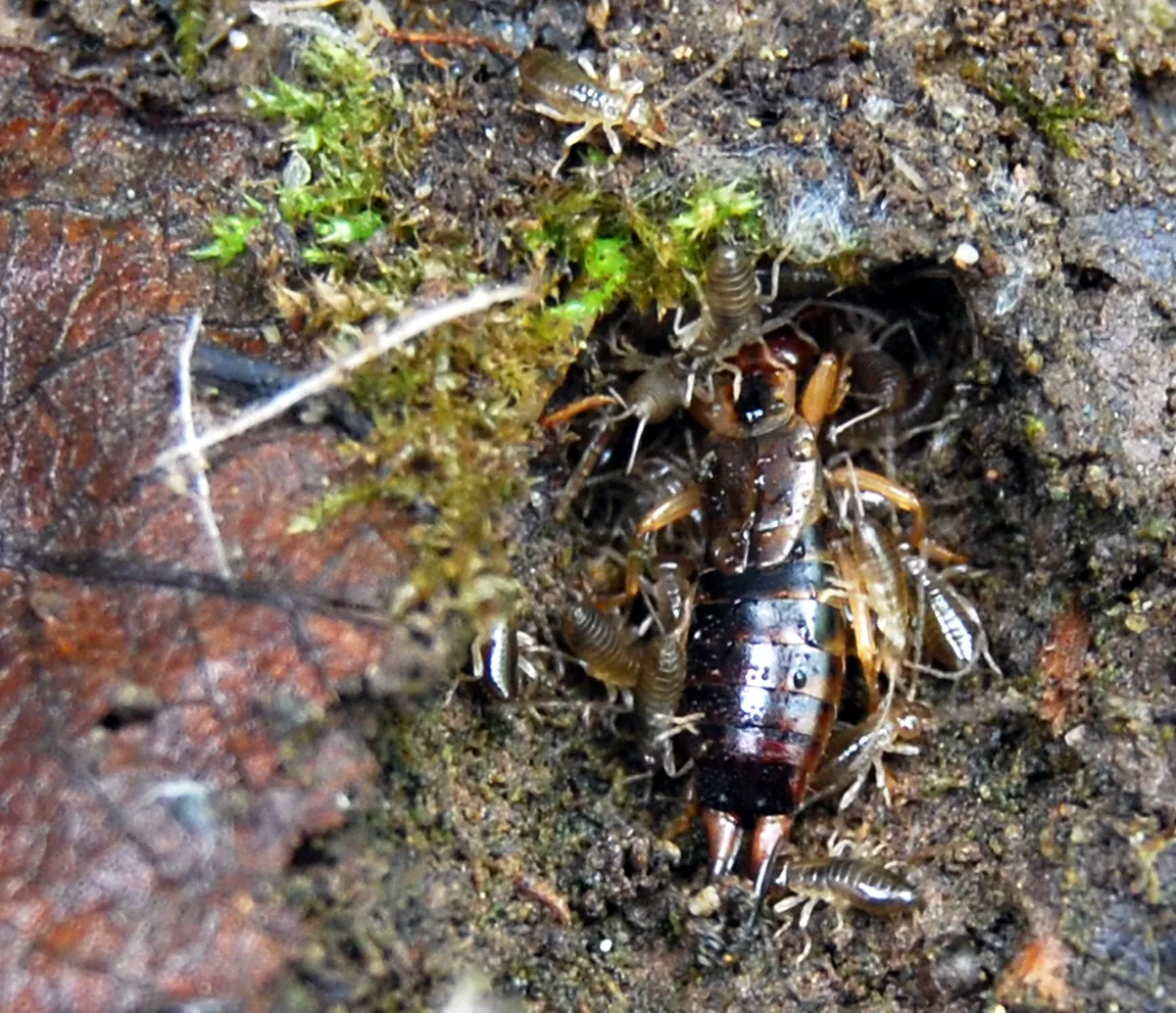
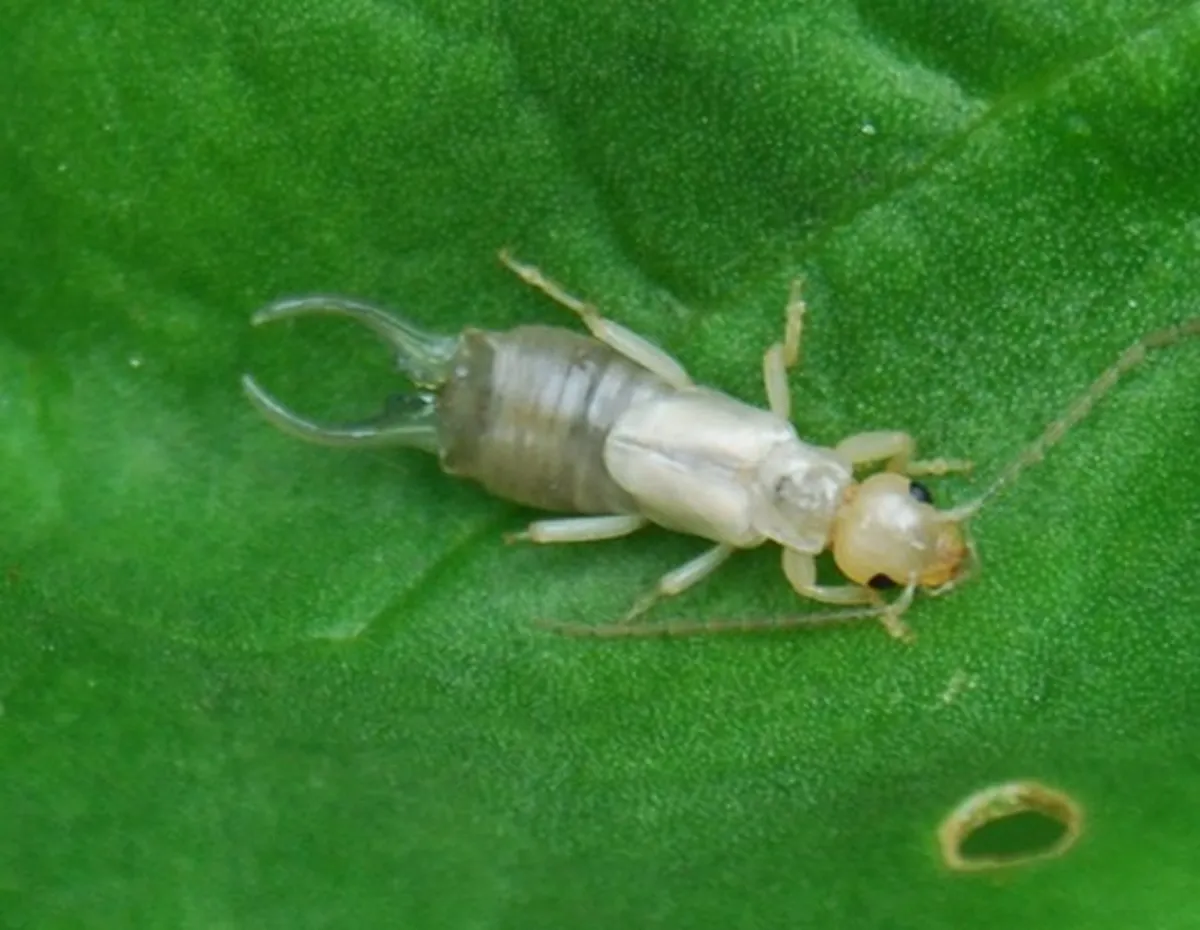
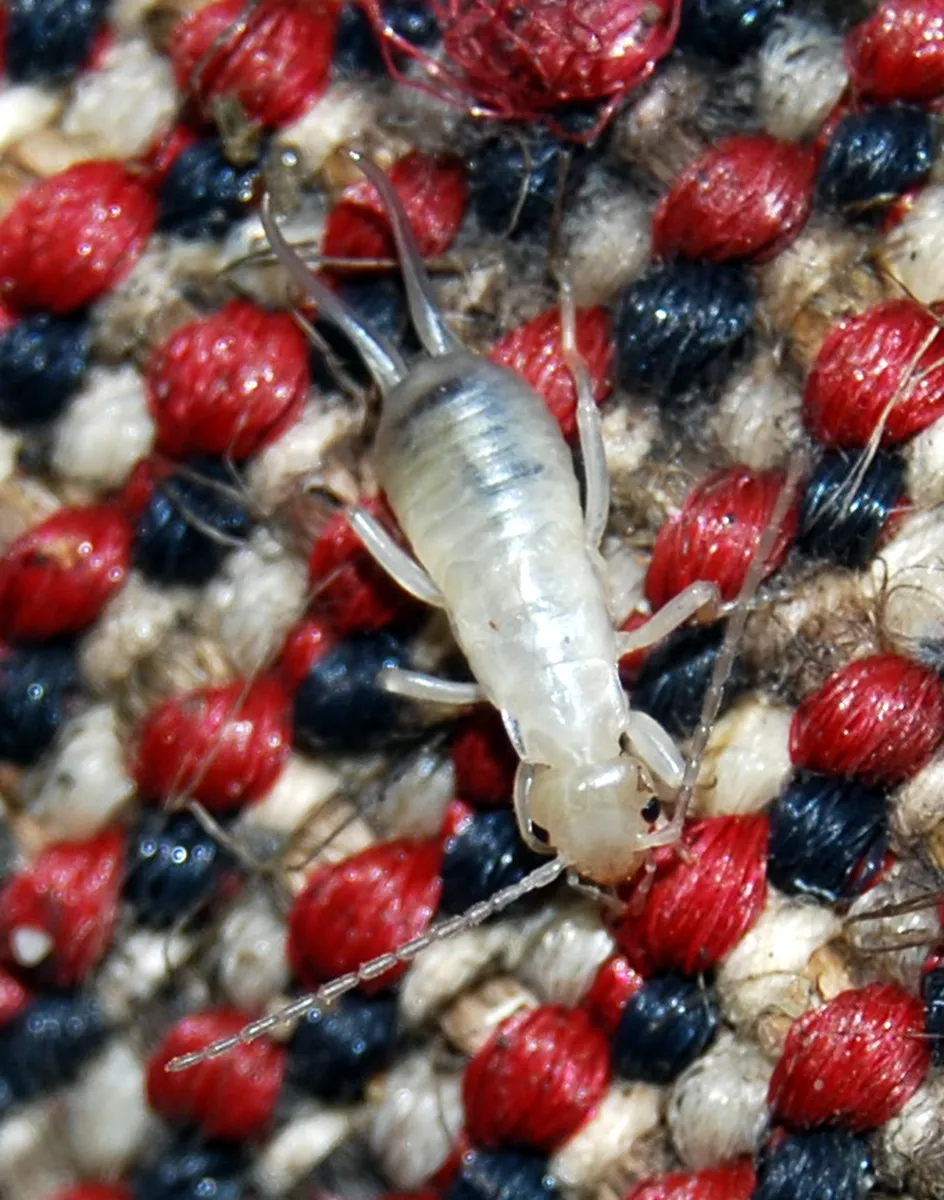
Earwigs were everywhere growing up, and I had many chances to handle both male and females. I found them docile and inquisitive and did not once receive a nip (only the females are capable of this, the males cerci are purely for wrestling other males). It was very common to find a female with her egg clutch, and due to their incredible maternal instincts, whenever I disturbed a nest, the female would make sure to arch her abdomen up and show off her cerci as a defense tactic. I had many encounters like this, as the mother would always stay with her eggs, cleaning them to prevent fungi and mould, until the little white nymphs finally hatched. She would stay until their second or third instar stage.
Some male specimens I have found sported immense cerci. The cerci are usually 4-8mm long in males and around 3mm in females, but some males can grow extremely long and exaggerated cerci due to sexual selection, a process known as positive allometry. It is also not unusual to find them in great numbers, believed to be driven by pheremones, messaging others to a safe and climatised hiding place.
I always knew the Common Earwig as Forficula auricularia, but recent mitochondrial DNA testing has shown that this 'species' is actually a species complex, consisting of at least four separate species. The British species is now regarded by many as the Western Common Earwig (Forficula dentata). However, it is still unclear as they are so identical that they can only be separated by DNA analysis, meaning some UK specimens could in fact be a separate species!
Common Earwig Similar Species Comparison
Distinguishing Features: Within the UK, the most notable lookalike is the rarer Lesne's Earwig (Forficula lesnei). This species is smaller and overall more reddish in colour with a pale head and thorax, it also lacks hindwings, rendering it flightless. The Tawny Earwig (Labidura riparia) is similar in colouration, however, it is much larger and presumed extinct in the UK. The Short-winged Earwig (Apterygidia media) is similar in colour but lacks the hindwings and is overall smaller and more slender, it is also nationally scarce and confined to south-eastern England. The other three UK species are a lot smaller.
Colour Forms:
- Albinism — Translucent pale white body with red eyes