Common Rough Woodlouse
(Porcellio scaber)
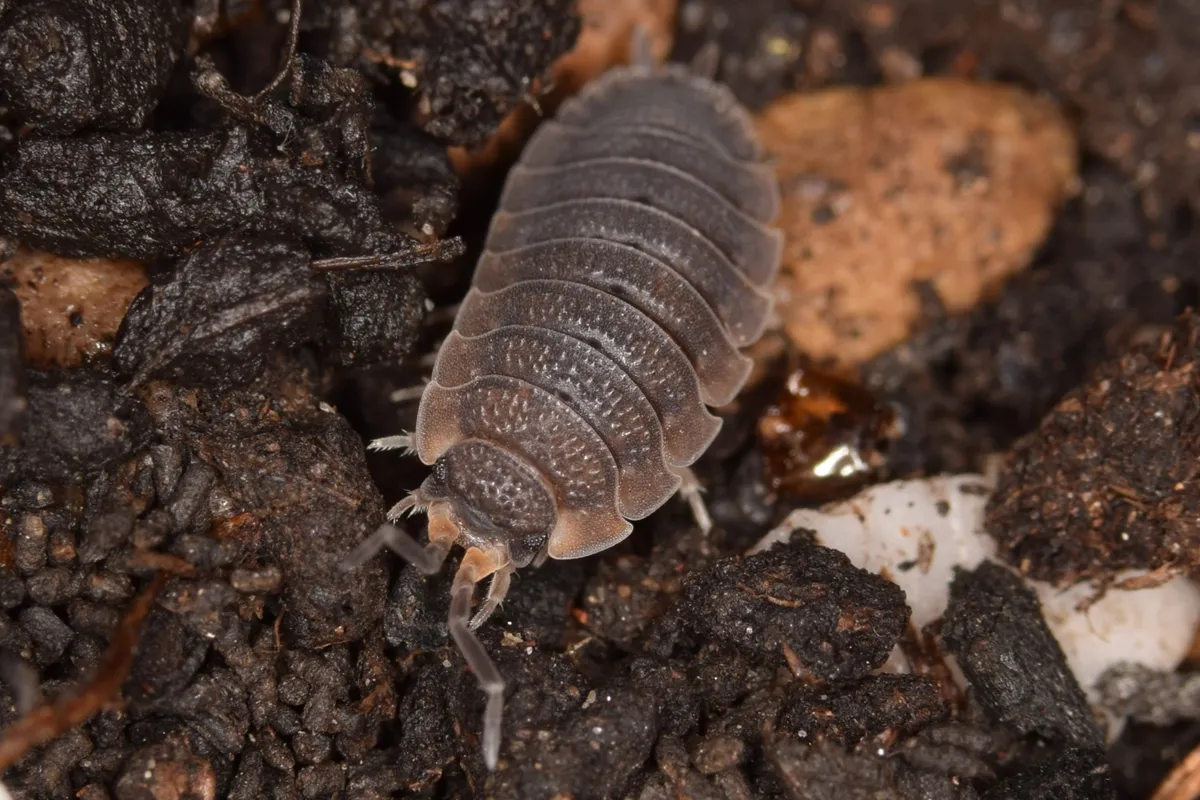
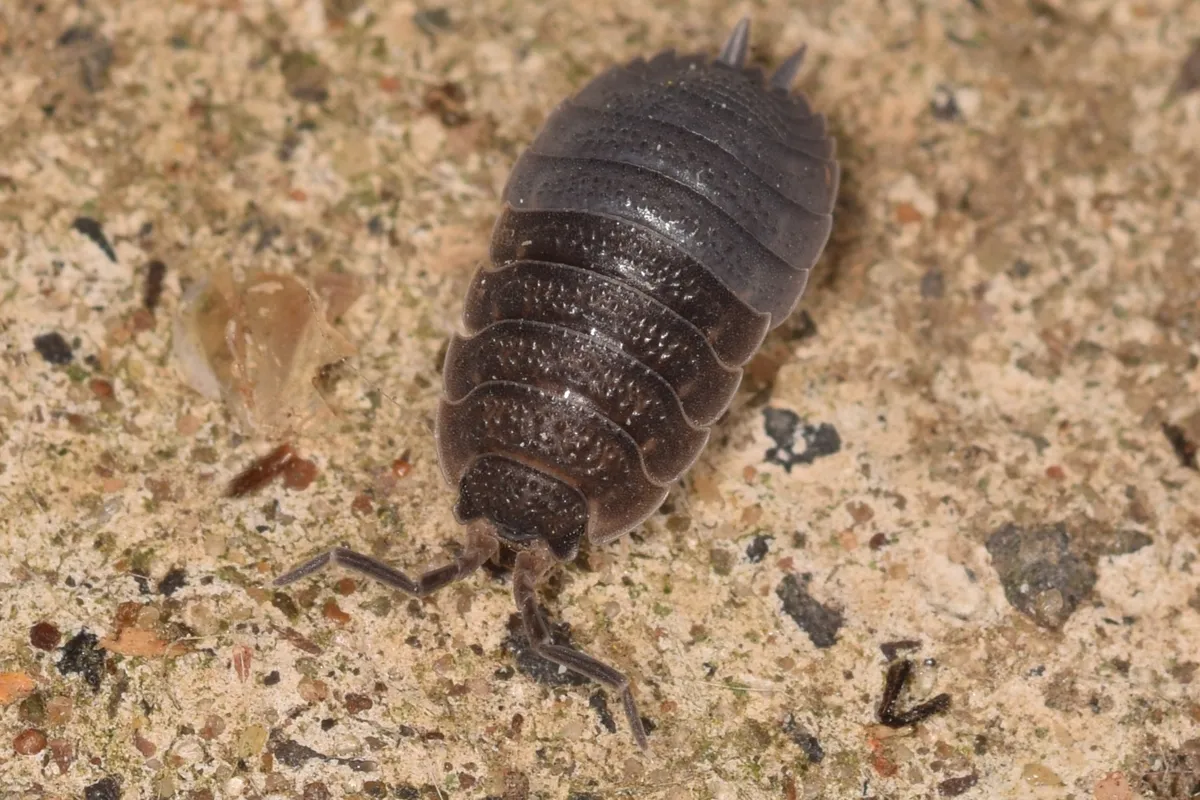
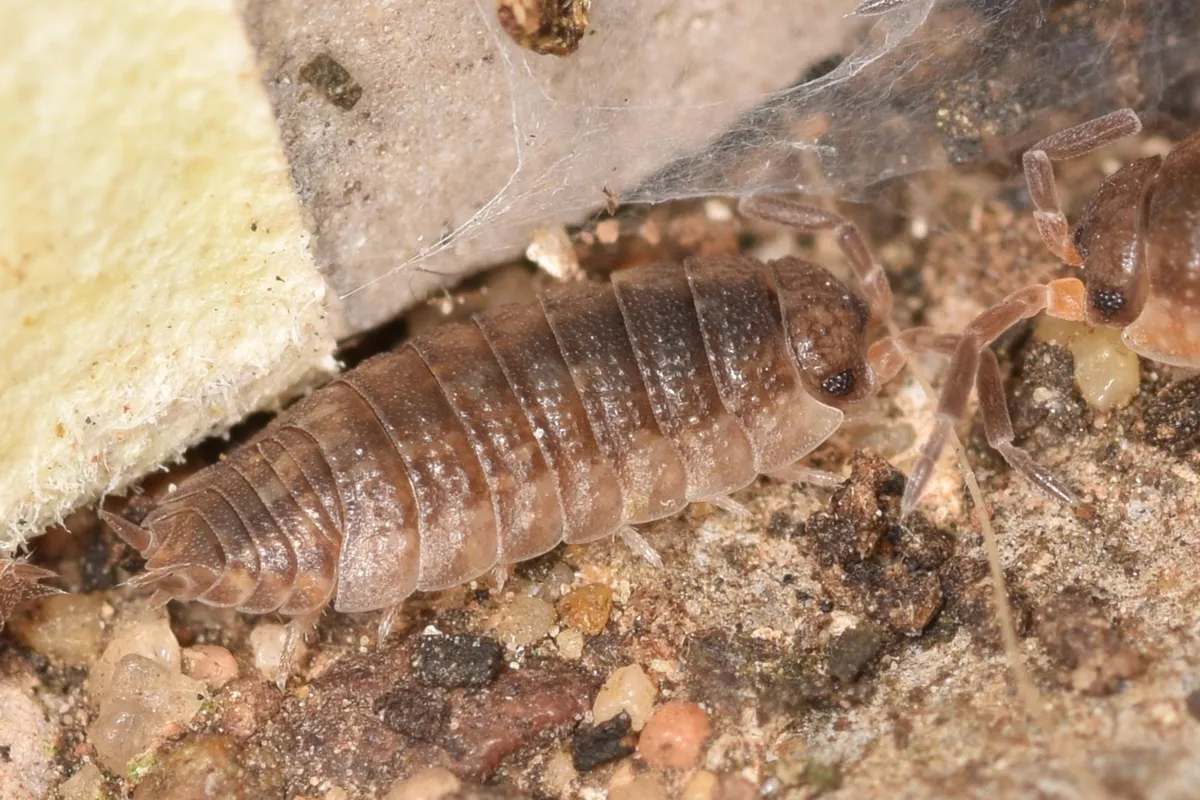
Welcome to the Wildlife Wanderer species identification guide. This factfile covers the Common Rough Woodlouse (Porcellio scaber), a striking, heavily armoured crustacean found across the UK known for the distinctive coarse, bumpy tubercles covering its dull carapace.
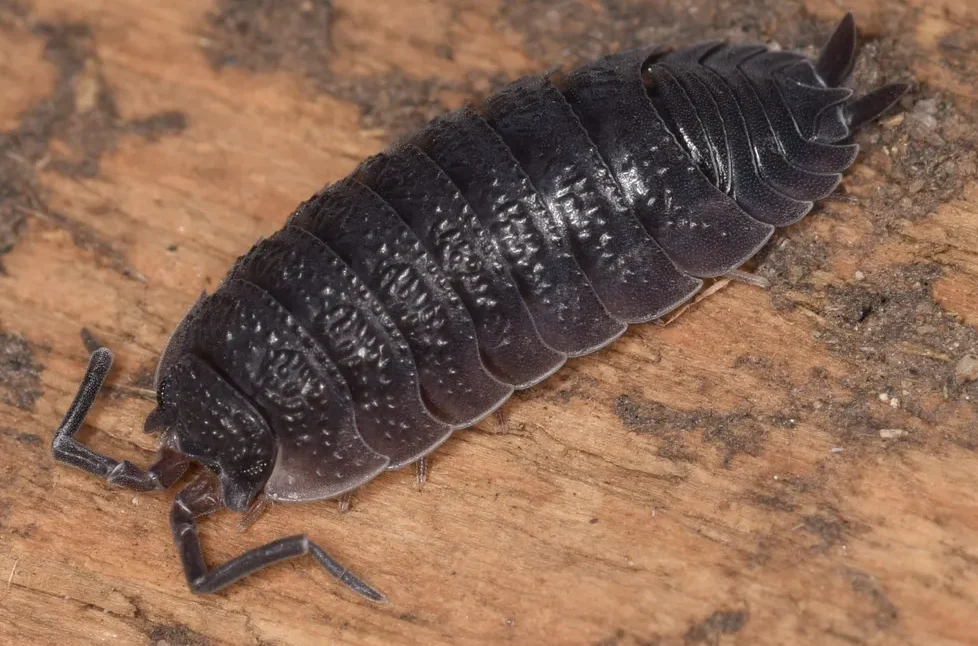
Common Rough woodlouse (Porcellio scaber) on wood.
Habitat & Distribution
- Diet: The Common Rough woodlouse (Porcellio scaber) is a detritivore that feeds primarily on decaying organic matter, such as rotting wood and dead leaves. They rely on the fungi and bacteria growing on these surfaces to help them digest nutrients, but they will also consume algae, moss, and fallen fruit.
- Habitat: Found across many terrestrial habitats, as long as they are dark and damp.
- Distribution: Europe. Introduced/spread to every continent except Antarctica.
- UK Distribution: Widespread across the whole of the UK.
- Rarity: Common.
Physical Description & Identification Keys
- Size: 17mm long.
- Description: Like many woodlice, this species has an overall grey appearance with a paler underside. The dorsal side has seven segments that appear as broad plates, curving backwards at the edges. Each plate is covered in rough bumps known as tubercles. The compound eyes are dark, and the antennae are elbowed. The small tail (telson) is centralised between a pair of uropods. In captivity, many colour morphs have been bred, from orange and brown to yellow and white. Specimens infected with the isopod iridovirus appear blue in colour.
Field Notes and Experiences
Woodlice seem to thrive in every garden I have ever been in. Occasionally I find them in the house, usually coming in on clothes or the dog, easily picking them up and removing them outside.
The underside shows two small white spots, known as pleopodal lungs, an evolved breathing organ that derived from their ancestors gills. They are often found hiding under stones and other items to prevent drying out (desiccation), as their permeable exoskeleton makes them vulnerable to water loss through diffusion.
The Rough Woodlouse has been studied for its turn-alternation behaviour. When escaping danger or navigating obstacles, it often alternates between left and right turns. One proposed explanation is that making a turn creates an imbalance in leg movements between the two sides of the body, causing the woodlouse to be biased toward turning in the opposite direction next time. This behaviour may help it maintain an effective escape route away from danger.
Common Rough Woodlouse Similar Species Comparison
Distinguishing Features: The Common Shiny Woodlouse (Oniscus asellus) exhibits a small varying patch of yellow/white marks on some of its segments, and each segment features a pale grey mark towards the outer edge of the segments. Rathke's Woodlouse (Trachelipus rathkii) has an overall brown-grey marbled colouration, and features a dark longitudinal stripe. The Painted Woodlouse (Porcellio spinicornis) is smaller in size and usually has a black head. The body is decorated in a marbled colouration of orange and yellow that surrounds a central longitudinal stripe.
Colour Forms:
- Albinism — Pure white body with red eyes
- Calico — Sex-linked patch pattern of orange/yellow and dark grey (females only)
- Dalmatian — White body base with scattered black specks/spots
- Erythrism (Orange / Red) — Solid orange-red body from complete reduction of dark melanin
- Leucism (White Out) — Opaque white body with dark black eyes
- Melanism — Uniform dark charcoal to solid black body
- Xanthism (High Yellow) — Bright golden-yellow body form