Painted Lady
(Vanessa cardui)
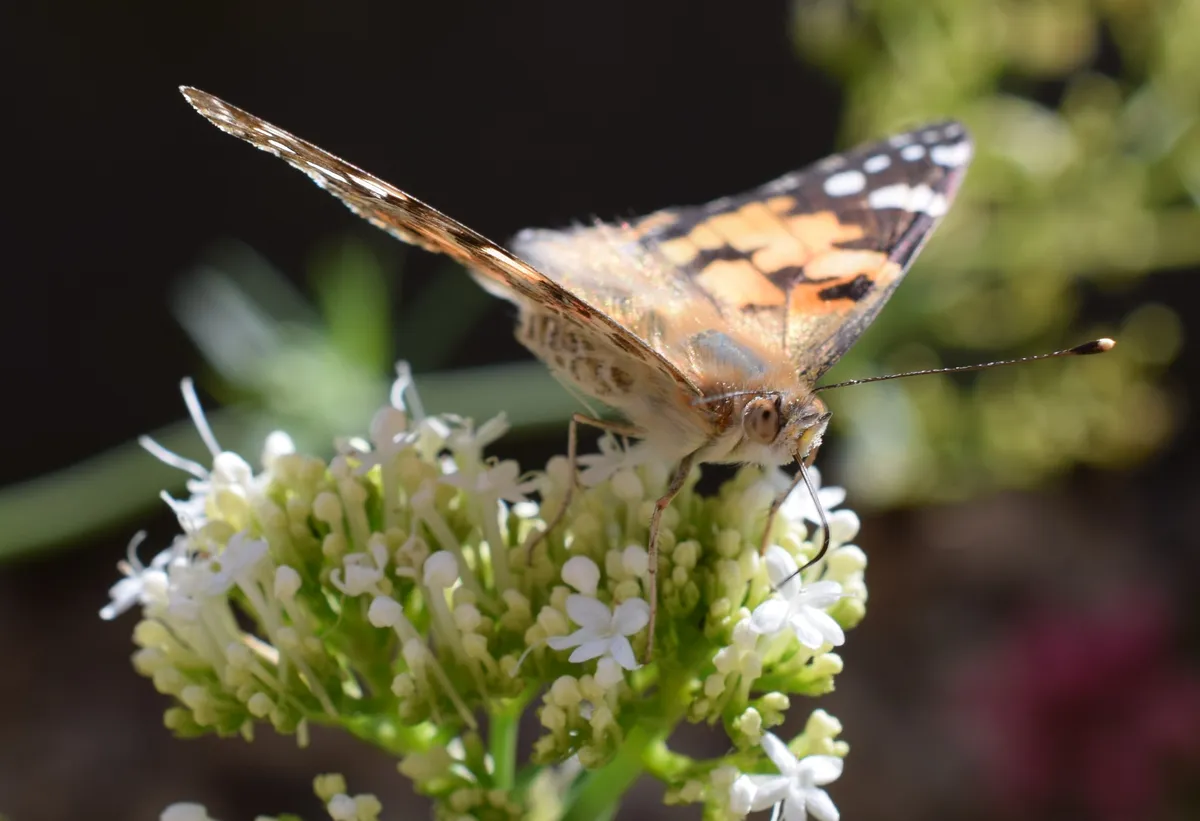
Welcome to the Wildlife Wanderer species identification guide. This factfile covers the Painted Lady (Vanessa cardui), a striking, migratory butterfly found across the UK known for the distinctive black-and-white spotted tips on its orange wings.
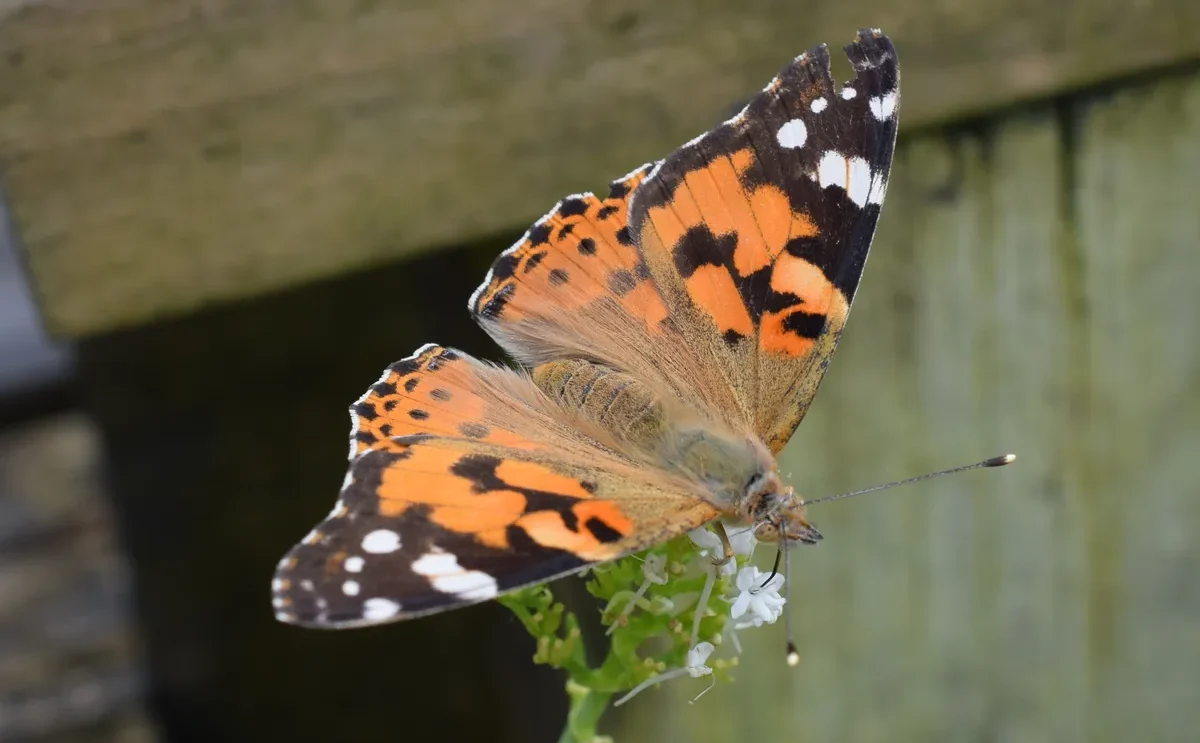
Adult Painted Lady Butterfly (Vanessa cardui): Upperwing colouration.
Habitat & Distribution
- Diet: Herbivorous nectar feeders. The adult butterflies feed on a wide variety of nectar-rich flowers, highly favoring thistles, knapweeds, buddleja, and ivy. The caterpillars feed voraciously on host plants, primarily thistles, nettles, mallows, and borage.
- Habitat: Found in gardens, meadows, fields, and virtually any open and sunny space.
- Distribution: Every continent, excluding Antarctica and South America.
- UK Distribution: Found across all of the UK.
- Rarity: Common.
Physical Description & Identification Keys
- Size: Wingspan 50-75mm.
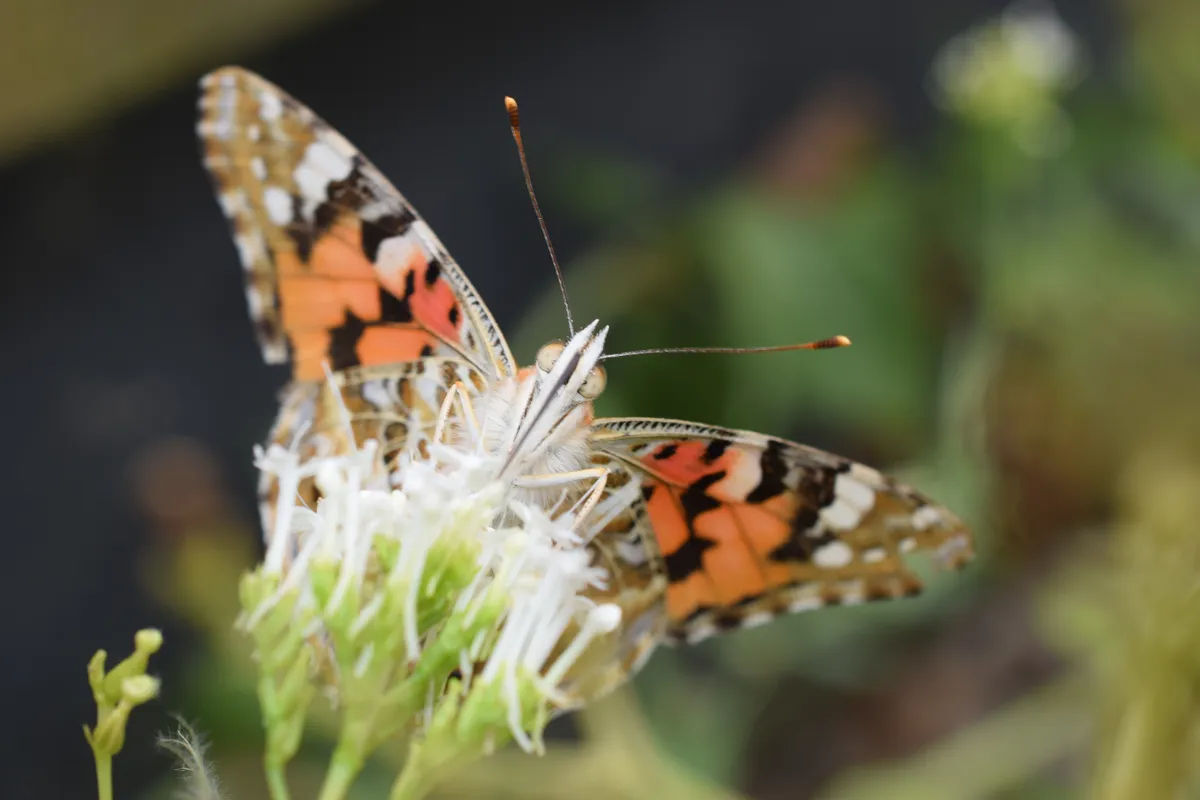
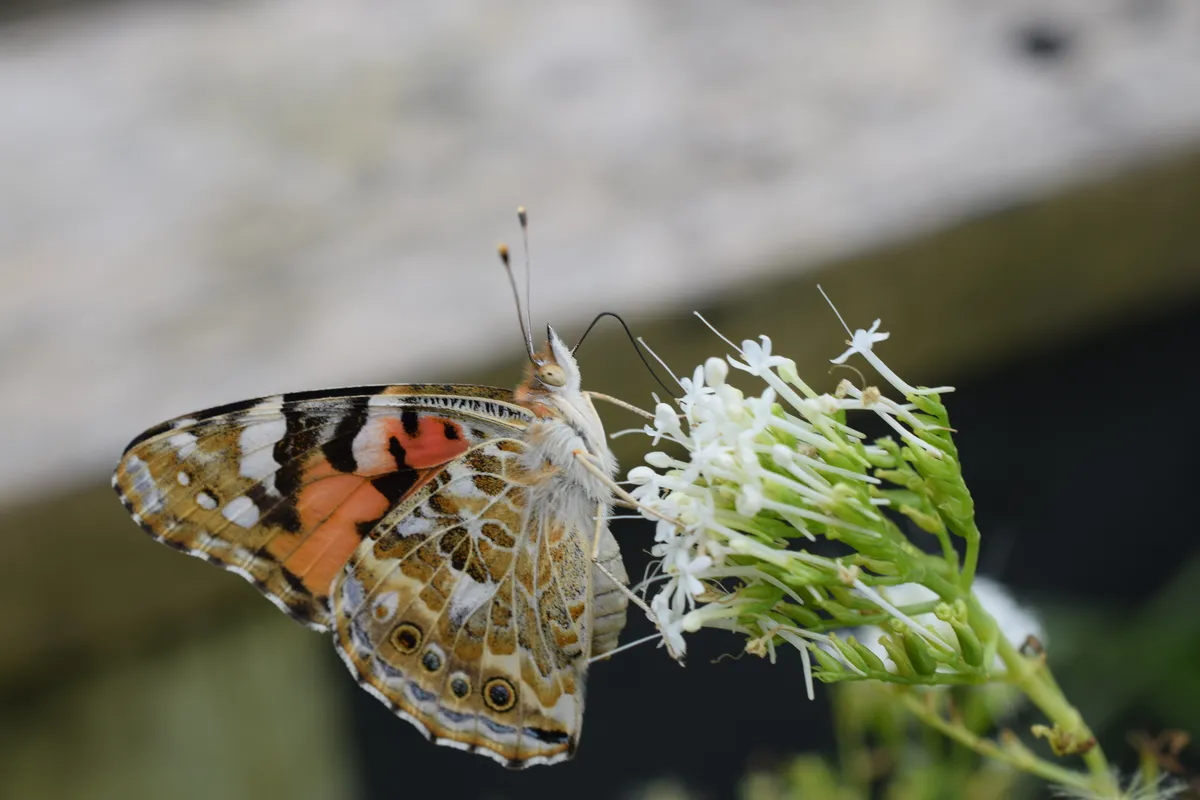
- Description: The base colour of the forewings is a tawny red-orange with the outermost half black with white spotting and blotches, and a white border. The hindwings are also red-orange with black spotting towards the edges and a white border. The body is brown with darker patches along the centre and neat stripes across the lower end. The antennae are black with a white tip. The underside is largely a pale brown and white marbling, with some of the red-orange showing through on the forewings and minimal amounts of the black pattern.
- The hindwing also exhibits five black spots that are sometimes surrounded by a black and a pale ring.
- The caterpillar is predominantly black with long black and yellow spiked tubercles.
Field Notes and Experiences
I have seen many Painted Ladies in my lifetime, but never as often as I have in 2026. They visit my garden and are particularly fond of the white Valerian. At first they were very nervous, but after a few attempts I was able to approach and watch their large coiled tongue extending deep into the flowers. As I entered the garden on one particularly sunny day, one actually flew towards me and landed on my chest. flashing his wings for all to see.
Painted Lady Similar Species Comparison
Distinguishing Features: The closest native species the Painted Lady could be confused with is the Small Tortoiseshell (Aglais urticae). The tortoiseshell is largely a bright red-orange with dark and wavy broad stripes varying with pale stripes from the leading edges of the forewings. It also exhibits a row of blue crescents within the margin of the hindwings. The underside of the wings is mainly brown with a paler broad band towards the edges. A rare migrant, the American Painted Lady (Vanessa virginiensis) can be distinguished by its prominent eye-spots on the underside of the hindwings.
Colour Forms:
- Ab. Albipuncta — (Extra white submarginal spot on forewing red band)
- Ab. Ate — (Darkened hindwings with pale submarginal spot reduction)
- Ab. Carduelis — (Basal areas dusted reddish with enlarged white forewing spots)
- Ab. Carnea — (Pale reddish-pink ground color replacing orange)
- Ab. Flava — (Normal orange-red markings replaced by straw yellow)
- Ab. Inornata — (Underside hindwing submarginal spots completely missing)
- Ab. Fulva — (Dark brown forewing spots replaced by tawny-fulvous)
- Ab. Elymi — (Dorsal black markings suffused into broad dark patches)
- Ab. Merrifieldi — (Cold-shock induced melanism with blue spots in hindwing band)
- Ab. Minor — (Dwarf form with normal patterning but small wingspan)
- Ab. Nigra — (Extreme melanic form with heavy dark scaling obscuring patterns)
- Ab. Ocellata — (Hindwing black spots centered with vivid blue)
- Ab. Pallida — (Washed-out, pale cream base ground color)
- Ab. Priameis — (Forewing white spots replaced by dark greenish-brown)
- Ab. Rosea — (Rosy pink suffusion across forewings)
- Ab. Schoenfellneri — (Forewing white costal spot absent and elongated submarginal spots)
- Ab. Semisuffusa — (Partial black melanic suffusion across forewings)
- Ab. Varini — (Forewing red band divided in center by black scaling)
- Ab. Wiskotti — (Extreme heat-induced melanism with smudged forewing bars)