Common Toad
(Bufo bufo)
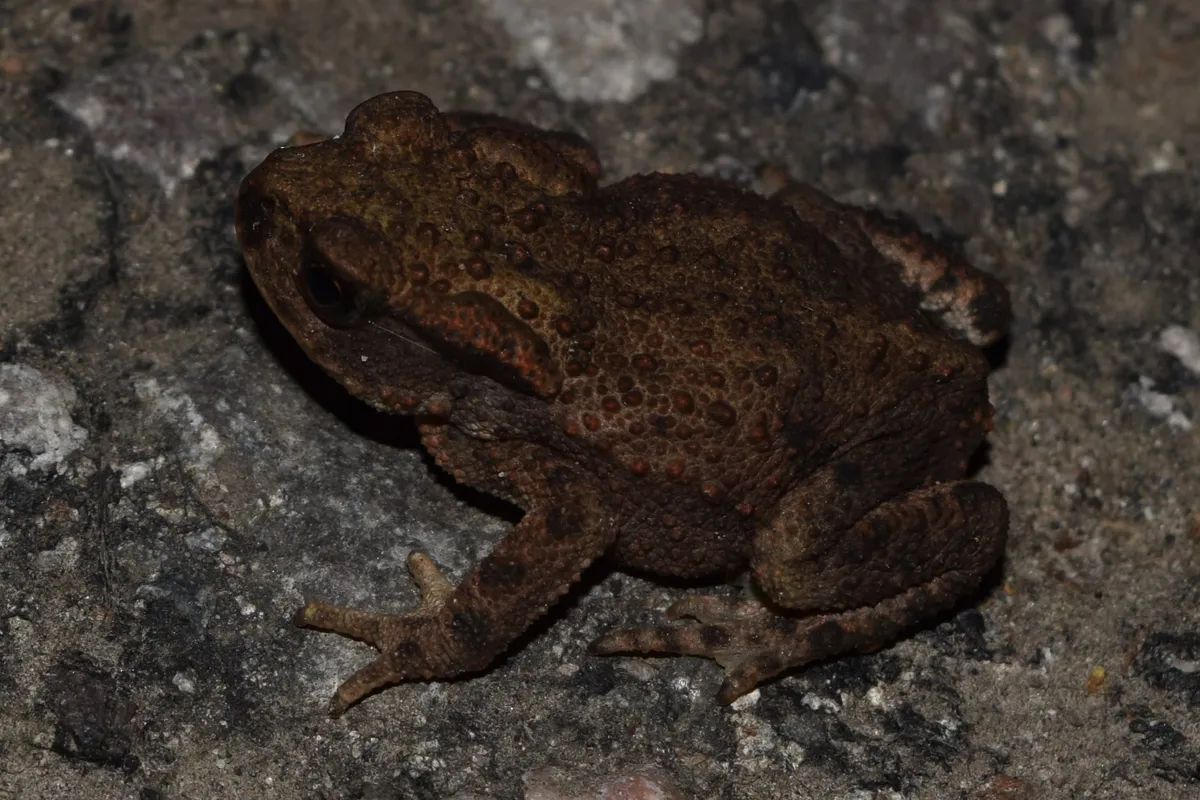
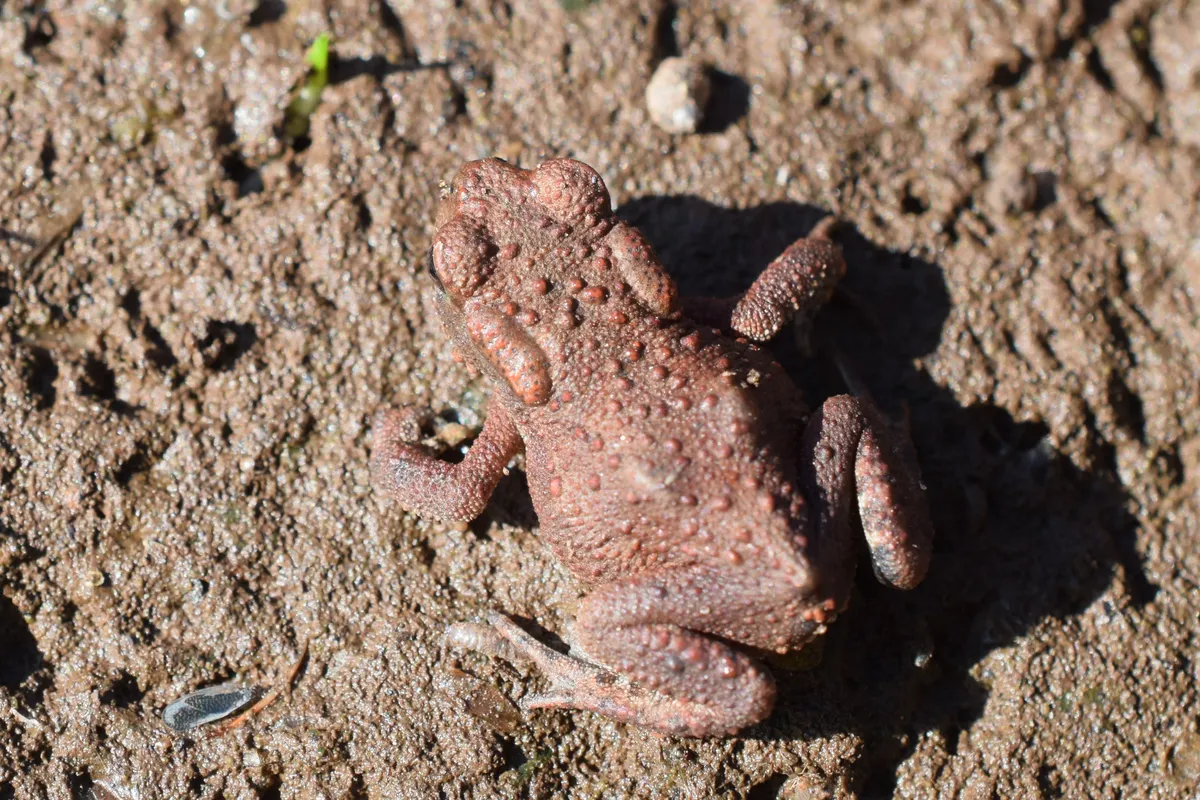
Welcome to the Wildlife Wanderer species identification guide. This factfile covers the Common Toad (Bufo bufo), a striking, heavyset amphibian found across the UK known for its dry, distinctively warty skin and copper-coloured, horizontal-slit eyes.
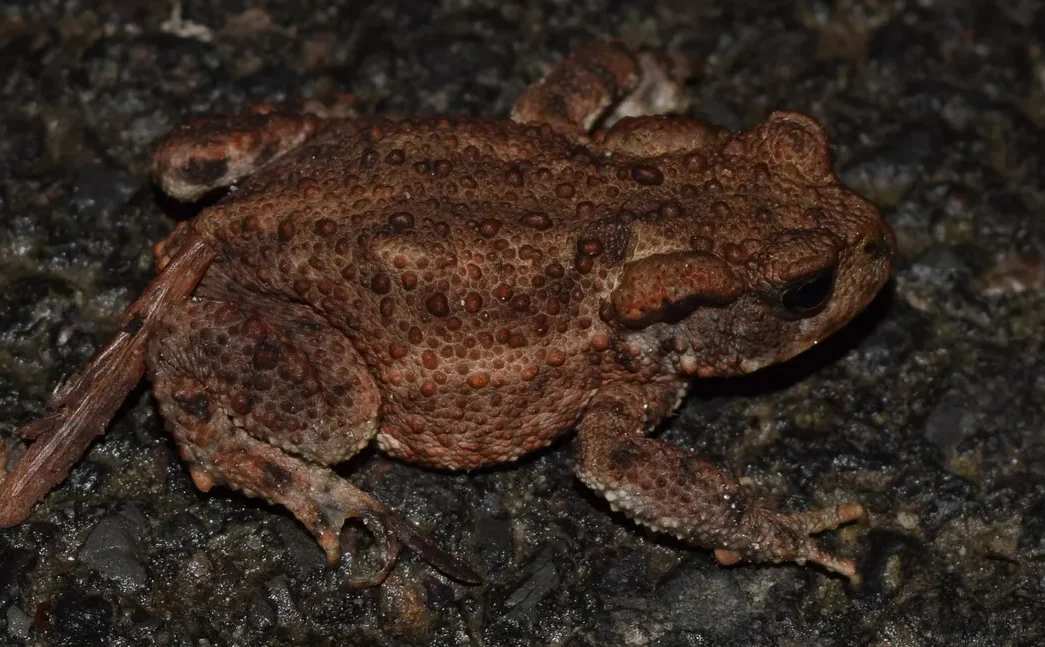
A Common Toad (Bufo bufo) showing its warty skin texture.
Habitat & Distribution
- Diet: A carnivorous predator that hunts mostly at night. It uses its sticky, projectile tongue to catch a wide variety of crawling invertebrates, including earthworms, slugs, snails, beetles, and spiders. Larger toads will also opportunistically consume small amphibians and mice, swallowing their prey completely whole.
- Habitat: Woodlands, grasslands, lakes and gardens.
- Distribution: Most of Europe, western North Asia and a small area within Northwest Africa.
- UK Distribution: Widespread across Britain.
- Rarity: Common.
Physical Description & Identification Keys
- Size: 8-14cm. Females are usually larger and stockier than males.
- Description: The Common Toad is a largely rounded species, ranging from brown to red-brown and dark-brown, to olive and grey, and the skin appears dry. The head is broad with a large mouth. The body is covered in wart-like glands and the head features a large parotoid gland on either side, just behind the eyes. The forelimbs are short and muscular with four unwebbed toes. The hindlimbs are also short (in comparison to a frog) and feature five partially webbed toes. The eyes are orange.
- During the mating season, the male develops rough patches on his forefingers (nuptial pads), which aid him in grabbing and securing a female. The male will clamber onto a female's back and grip her around the body and under the forelegs (known as amplexus). It is not unusual to see male toads carry out this practice on other males and even fish, getting lost in their exuberance. The tadpoles (toadpoles) are broad and chunky and are uniformly dark. They usually swim solo, and rely on the fact that they taste foul as protection. Frog tadpoles in comparison are usually slimmer, dark at first and then becoming lighter due to golden speckling, and usually swim in groups for protection.
Field Notes and Experiences
The Common Toad was another frequent visitor in my childhood garden, and, like many other species, appears to have disappeared from many urban gardens. I remember handling many of them, with their first form of defence to urinate all over my hands (an involuntary action to make them lighter and able to escape quicker). I only ever saw one puff himself up and extend his legs, a behaviour to make itself look bigger, but generally they seemed quite happy to be handled.
My most recent sightings were at Center Parcs and the Brecon Beacons, where I found countless juveniles hidden under most of the rocks I upturned. I even had one occasion where I found a juvenile Common Frog sandwiched between two juvenile Common Toads.
The glands on the Common Toad's back secrete a liquid known as bufotoxin. This toxin is foul-tasting and used to deter predators. The bufotenin within the toxin (a compound related to psychedelics) lives in folklore; a lick of a toad will take you on a psychedelic trip. In reality, ingesting the secretions will lead to severe poisoning due to the cardiac glycosides it contains. There is one species within Bufonidae that contains hallucinogenic properties, however, even this species needs to be handled with care and will likely cause toxic poisoning rather than a wild trip. Interestingly, the Barred Grass Snake (Natrix helvetica) seems to be impervious to the Common Toad's toxin.
Common Toad Similar Species Comparison
Distinguishing Features: The Natterjack Toad (Epidalea calamita) is smaller and has paler, yellower eyes. It also features a narrow yellow longitudinal stripe along its back. The Common Frog (Rana temporaria) lacks the warty appearance, has longer and more slender limbs and a pointed snout. The Common Frog also exhibits dark blotchy pattering on wet and moist skin, and spends more time in and around water than the Common Toad.
The only other similar species is the Jersey Toad (Bufo spinosus), however, this species is confined to the island of Jersey, is larger than the Common Toad, its glands are more pointed.
Colour Forms and Hybrids:
- Albinism — Translucent pinkish-yellow skin with red eyes
- Leucism — Pale white to pale yellow skin with normal dark eyes
- Xanthism — Bright golden-yellow skin
- Hybridisation with the Spiny Toad (Bufo spinosus) and the Caucasian Toad (Bufo verrucosissimus)