Common Frog
(Rana temporaria)
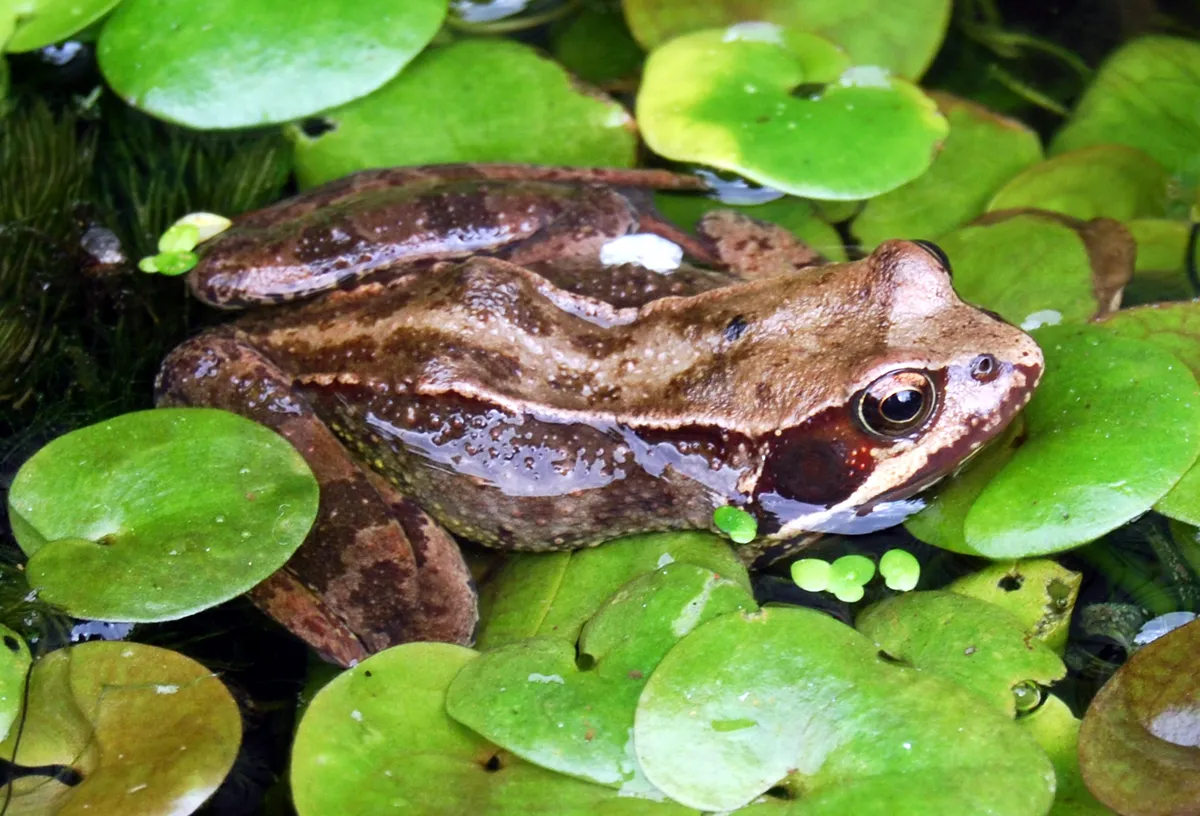
Welcome to the Wildlife Wanderer species identification guide. This factfile covers the Common Frog (Rana temporaria), a highly adaptable, smooth-skinned amphibian found across the UK known for its moist, variable-coloured skin and distinct dark patches behind its large, circular-pupil eyes.
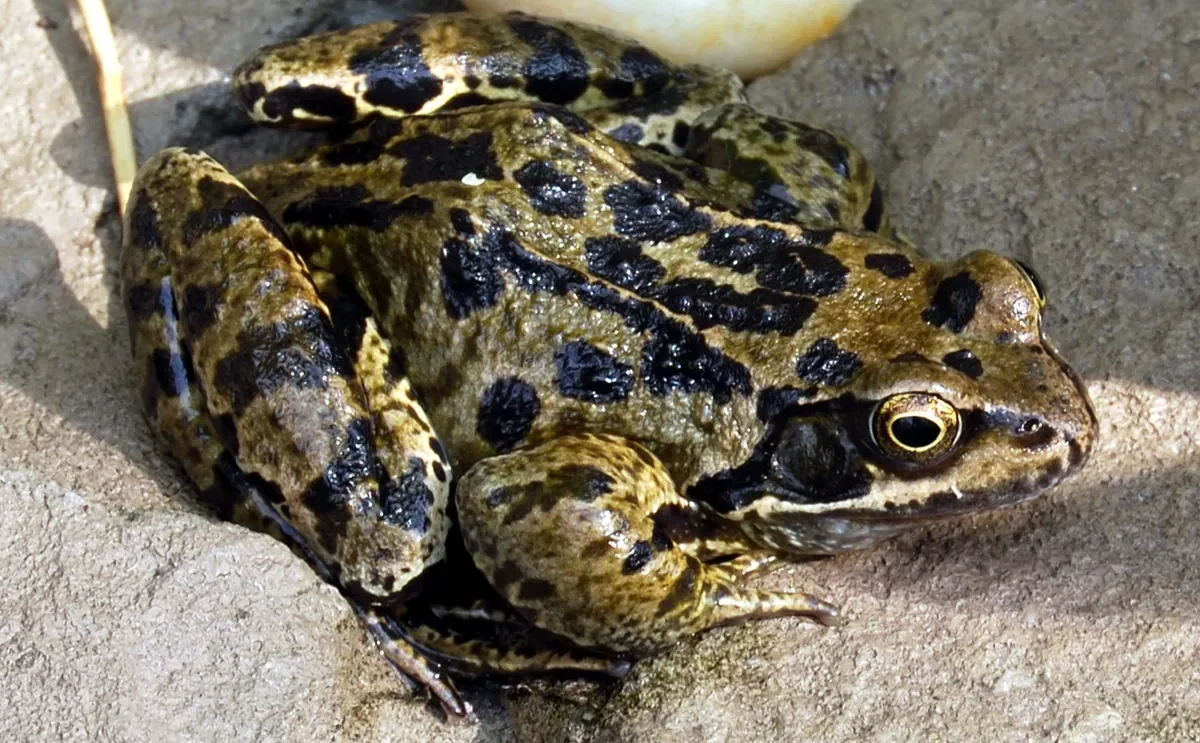
Common Frog (Rana temporaria) showing its smooth and wet-looking skin.
Habitat & Distribution
- Diet: A carnivorous predator that hunts mostly at night. It uses its sticky, projectile tongue to catch a wide variety of crawling invertebrates, including earthworms, slugs, snails, beetles, and spiders. Larger frogs will also opportunistically consume small amphibians and small rodents, swallowing their prey completely whole.
- Habitat: Ponds, lakes, marshes, damp woodlands, grasslands, and gardens. They require habitats with a close proximity to damp areas or standing water.
- Distribution: Most of Europe, stretching east into Russia and northern Asia.
- UK Distribution: Widespread and common across Britain and Ireland.
- Rarity: Common.
Physical Description & Identification Keys
- Size: 9-13cm. Females are usually larger and broader than males.
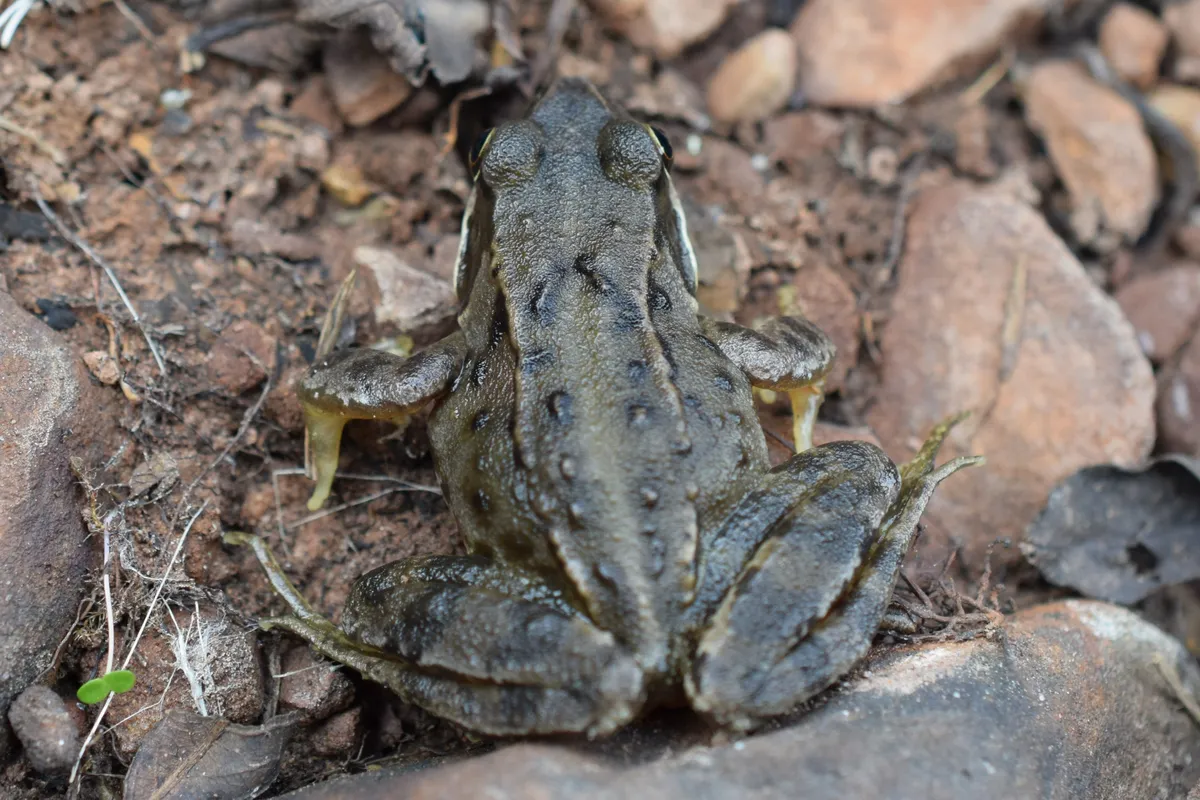
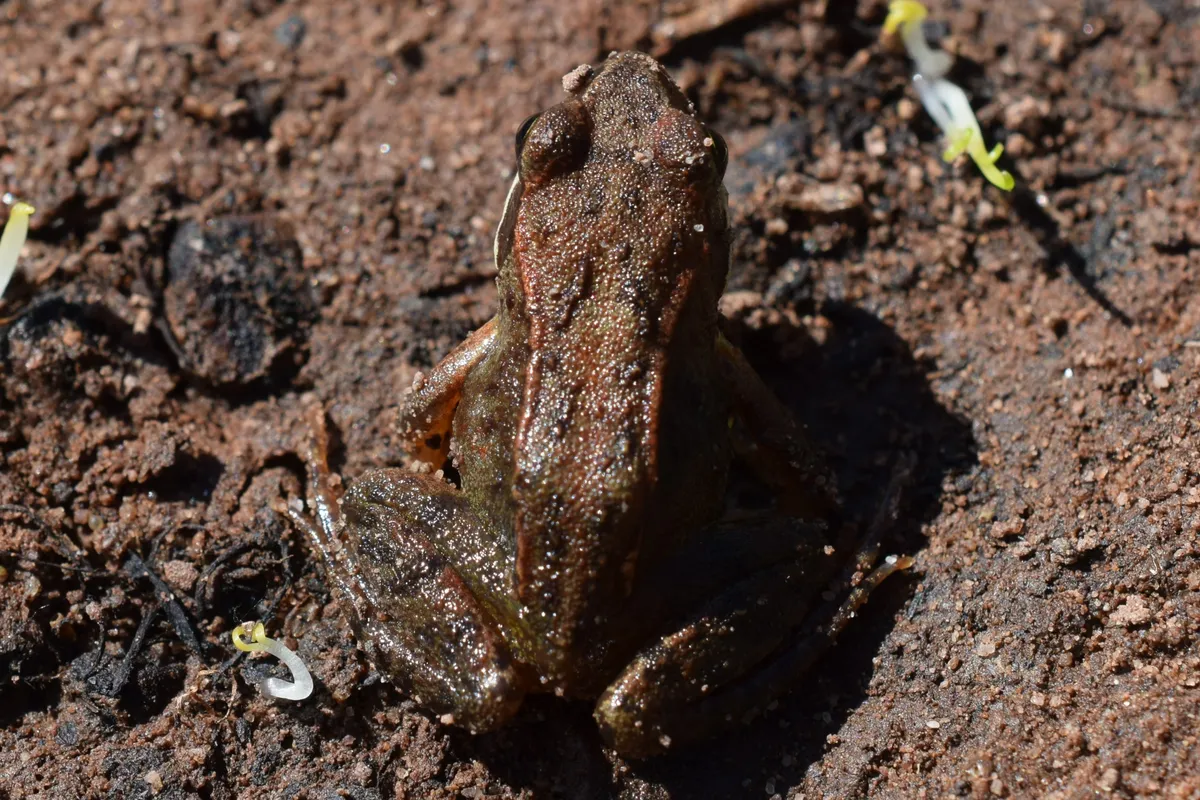
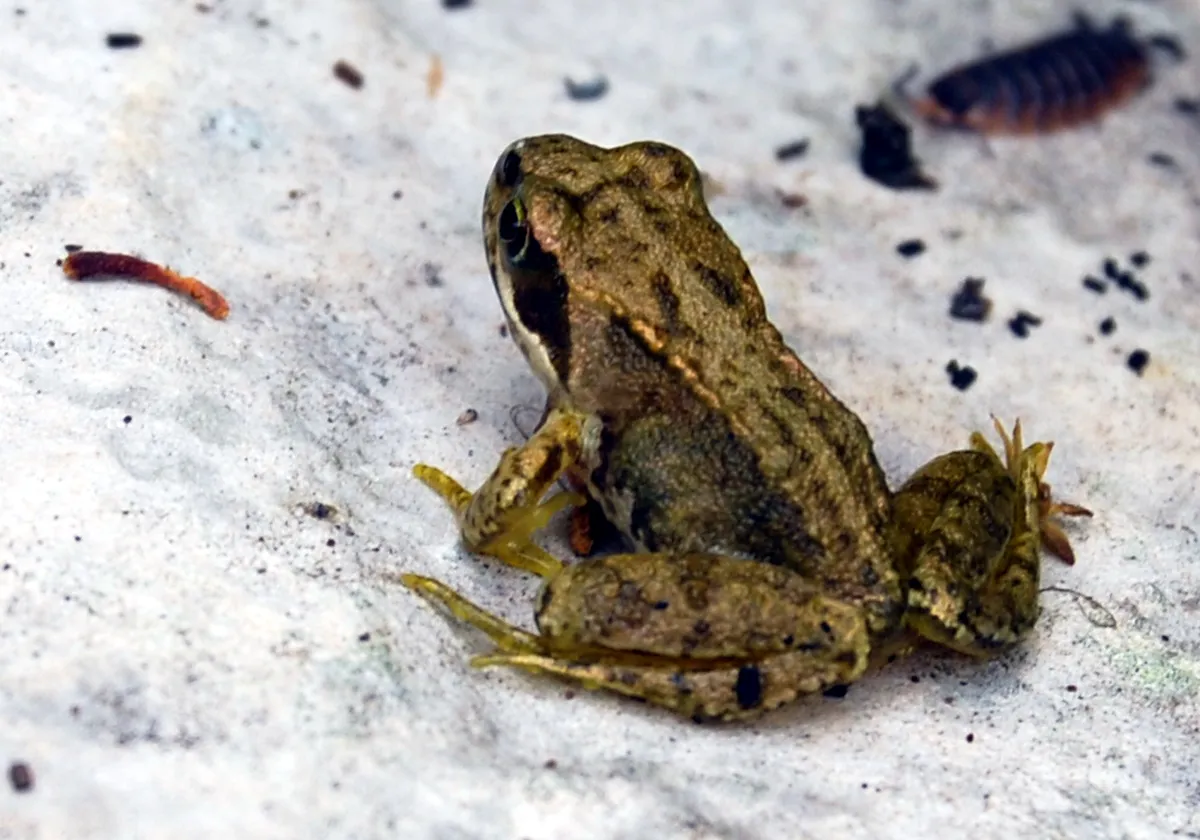
- Description: The Common Frog is a sleek, athletic species with smooth, moist skin that varies wildly in color, ranging from olive-green and brown to grey, yellowish, or even reddish-pink. Its most defining feature is a dark, triangular patch (or "mask") behind each eye, covering the eardrum. The head is relatively pointed with a wide mouth. The forelimbs are short with four unwebbed fingers. The hindlimbs are long and highly muscular, and feature five fully webbed toes. The eyes are large and golden with horizontal pupils.
- During the breeding season, the male develops darkened, rough patches on his inner thumbs (nuptial pads) to securely grip the female. He will clamber onto her back and hold her tightly under her armpits in a mating embrace called amplexus. Overly eager males will sometimes clasp onto other frogs, fish, or inanimate objects in their rush to mate.
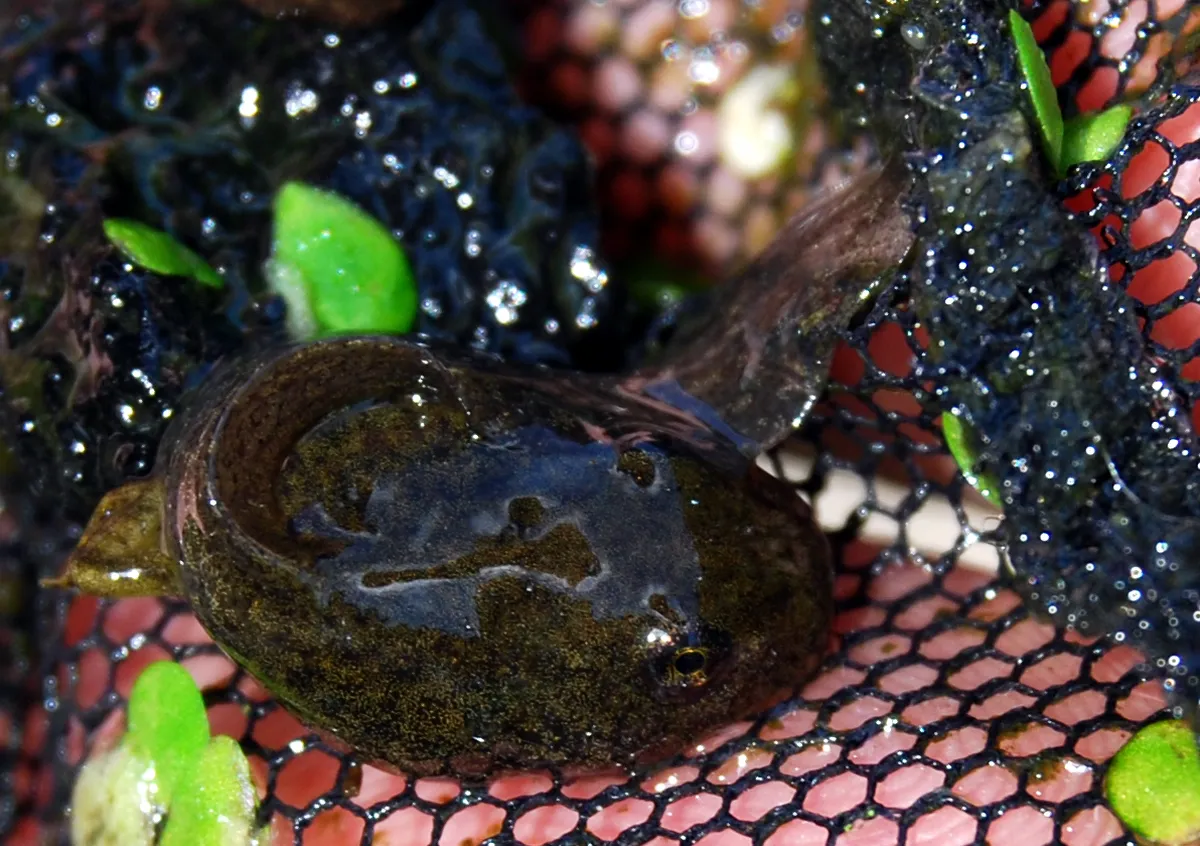
- The tadpoles are initially slim and uniform black. As they grow, they develop a lighter, mottled brown or olive color with distinct golden speckling. Frog tadpoles typically swim solo or in loose groups and rely on camouflage to avoid being eaten.
Field Notes and Experiences
With our small but humble garden pond, my childhome home enticed many frogs. Here I was able to enjoy the whole life cycle; from spawn to adult, and all the metamorphic stages inbetween. It was not uncommon to find young or adult frogs hidden amongst my mum's strawberry patch, or to come face to face with an adult, nonchantly hopping along the garden path. When disturbed they would sit in place, and on rare ocassions lift their forefeet up, as if sticking their 'thumbs' in their ears, a defensive posture known as the thanatos (playing dead)or threat response. Sometimes this action was preceeded by a squeak!
I held many frogs, and the majority would urinate on my hand, another defensive tactic. But other than that, they were usually quite calm and stayed in my palm for me to admire.
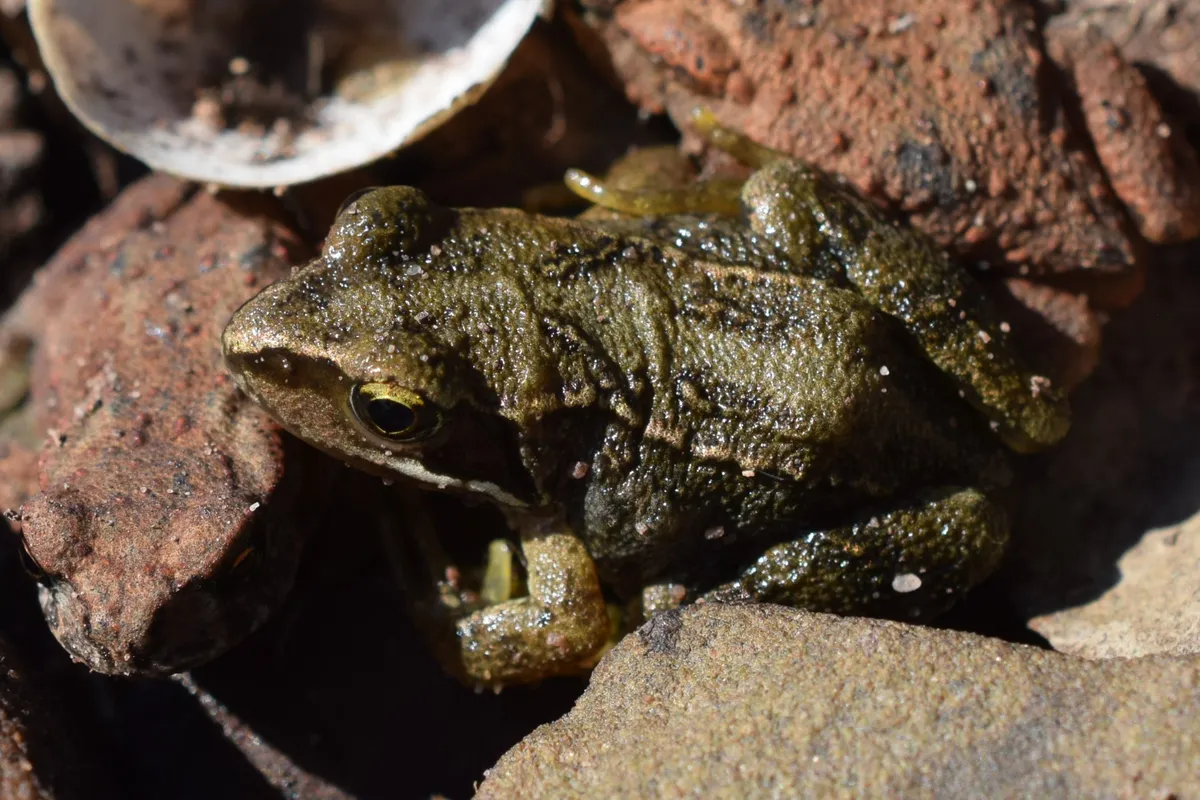
My most recent sightings were at the Brecon Beacons, where I found countless juveniles hidden under most of the rocks I upturned. I even had one occasion where I found a juvenile Common Frog sandwiched between two juvenile Common Toads. Other than that, I have not seen many frogs recently, possibly due to the lack of ponds, urbanisation or the Ranavirus.
Recognised Subspecies
- Heron's Frog (R. t. honnorati)
- Iberian Common Frog (R. t. parvipalmata)
- European Common Frog (R. t. temporaria)
The subspecies differ mainly in overall body proportions, hind limb and foot length relative to body size, and geographic isolation.
Common Frog Similar Species Comparison
Distinguishing Features: The Common Toad (Bufo bufo) lacks the pointed snout, has shorter, stockier limbs, and an overall dry and warty appearance. It exhibits a uniform brownish colouration and spends significantly less time in and around water .
The only other highly similar frog species in the British Isles is the Agile Frog (Rana dalmatina); however, that species is entirely confined to the island of Jersey, is typically paler than the Common Frog, and features even longer, more slender hind limbs built for massive leaps.
Colour Forms:
- Albinism — White skin with red eyes
- Erythrism — Brick-red, orange, or reddish-pink skin
- Leucism — Pale white skin with normal dark eyes
- Melanism — Charcoal to solid black skin
- Xanthism — Bright golden-yellow skin