Common Shiny Woodlouse
(Oniscus asellus)
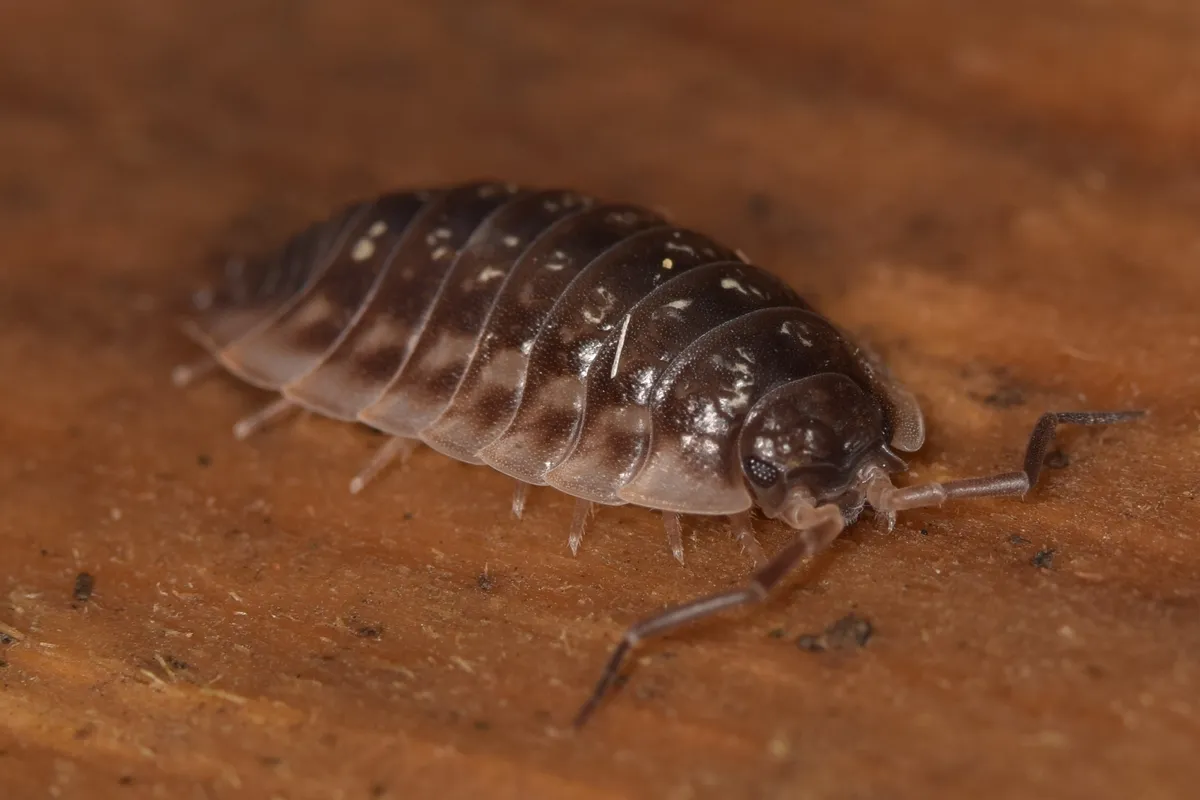
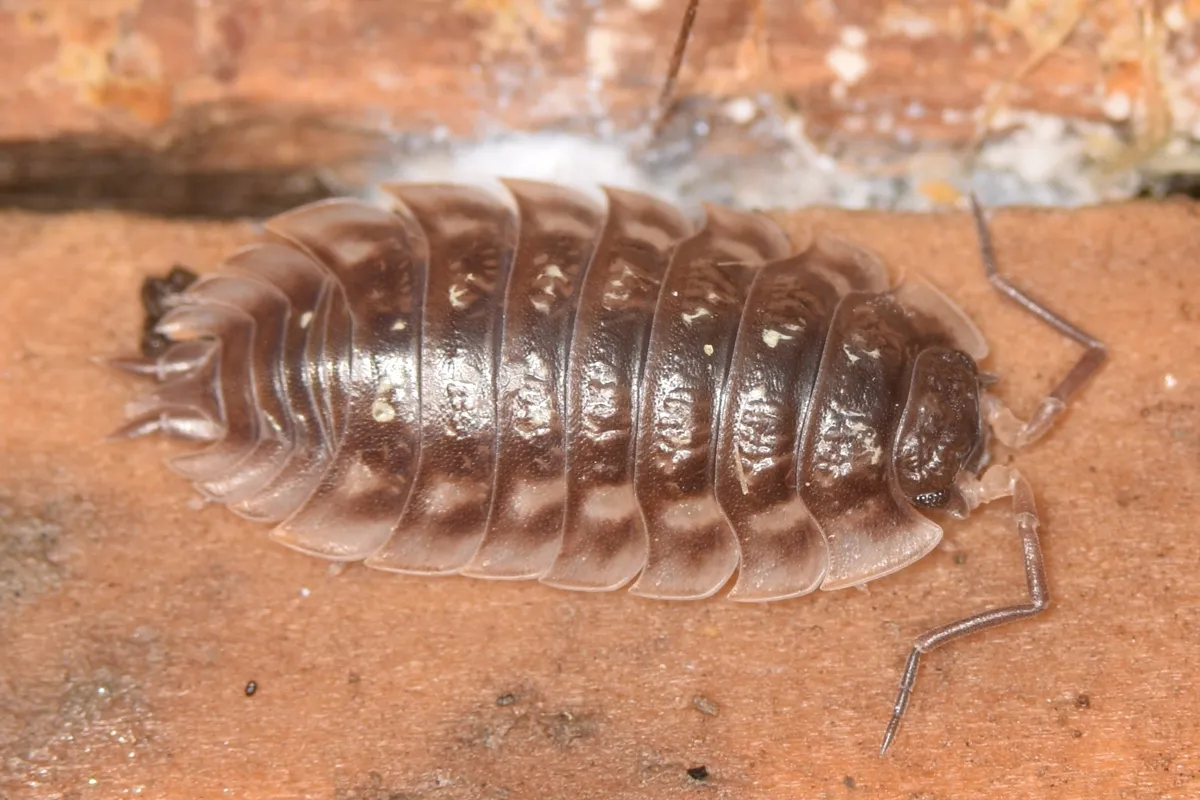
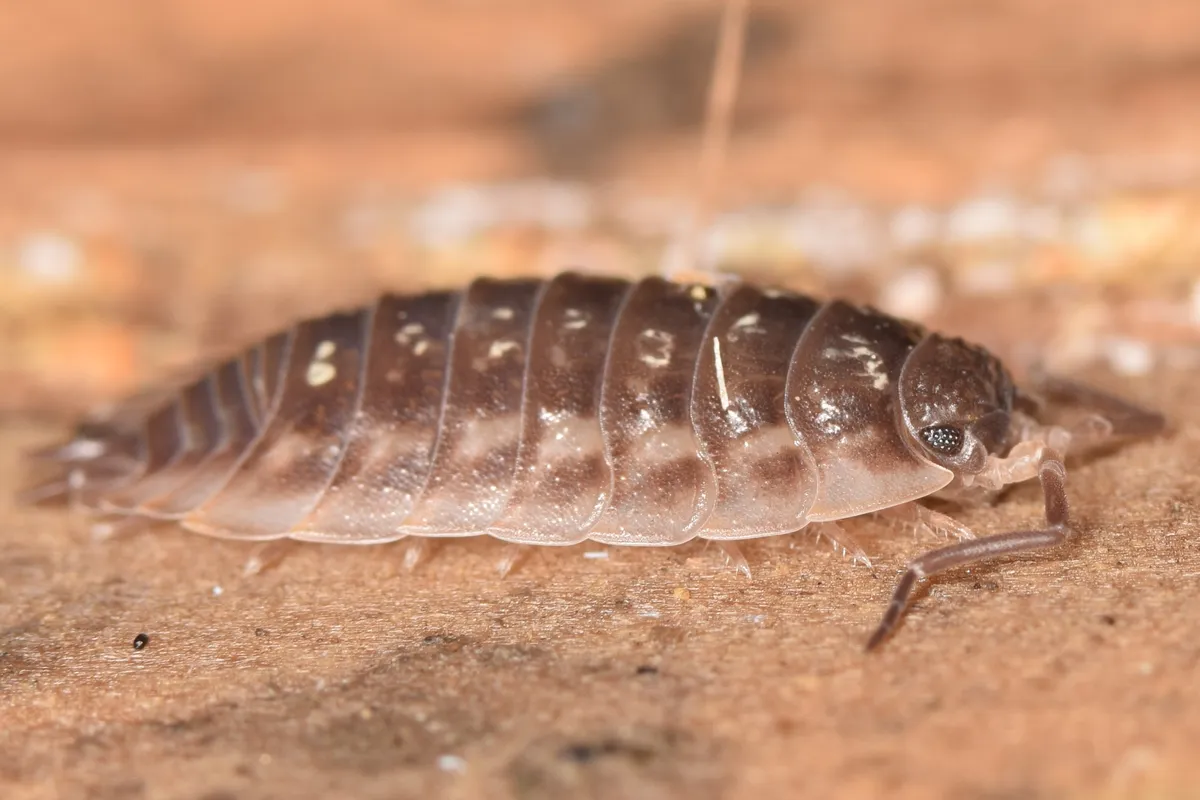
Welcome to the Wildlife Wanderer species identification guide. This factfile covers the Common Shiny Woodlouse (Oniscus asellus), a striking, wide crustacean found across the UK known for its flattened, glossy body and a highly contrasting pale skirt of yellow spots along its edges.
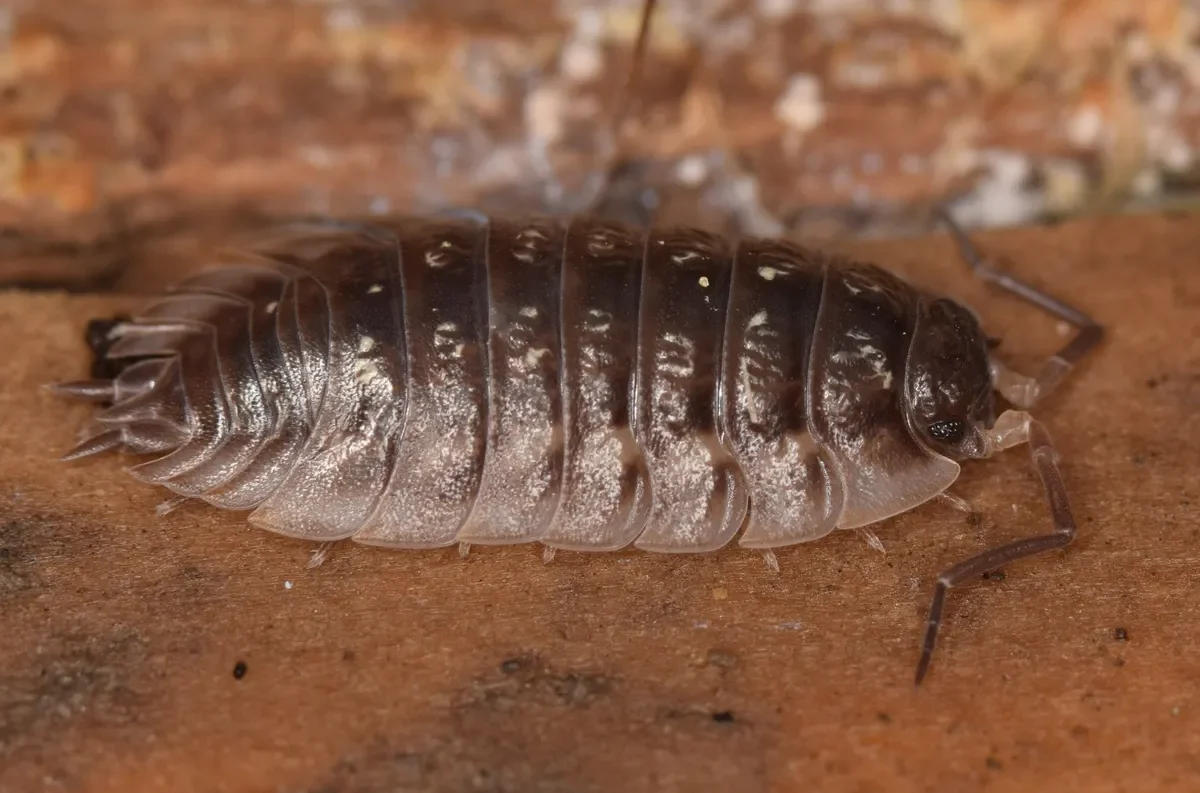
Common Shiny Woodlouse (Oniscus asellus) on wet wood.
Habitat & Distribution
- Diet: A detritivore that feeds primarily on decaying organic matter, such as rotting wood, leaf litter, and decomposing plant tissue. They rely heavily on the fungi and bacteria growing on these damp surfaces to help them break down tough cellulose, but they will also opportunistically consume algae, moss, and fallen rotting fruit.
- Habitat: Found across many terrestrial habitats, as long as they are dark and damp.
- Distribution: Northern and Western Europe and a few Atlantic Islands (the Azores and Madeira). Introduced/spread to North America, Canada and Mexico.
- UK Distribution: Widespread across the whole of the UK.
- Rarity: Common.
Physical Description & Identification Keys
- Size: 16mm long.
- Description: The overall colour of the Common Shiny Woodlouse is grey to brown, with paler edges to each body segment. Each of the seven segments also exhibits a pale patch towards each edge. The segments can show varying amounts of yellow/white patches along or near the central area. The compound eyes are dark, and the antennae are elbowed.
Field Notes and Experiences
The Common Shiny Woodlouse has usually been easy to identify, due to its yellow markings. However, I was unaware that the UK currently has two subspecies, Oniscus asellus asellus and the Western Shiny Woodlouse (Oniscus asellus occidentalis). The Western form is rarer and restricted mainly to the south-west. It was described in 1994, and its distinguishing features include brighter colouration, a smaller size, and a more domed appearance. Due to its smaller population, and the fact that both will interbreed, the Western form is classified as Near Threatened.
Recognised Subspecies
- Common Shiny Woodlouse (O. a. asellus) - UK
- Western Shiny Woodlouse (O. a. occidentalis) - Southwestern Britain
The subspecies differ mainly in body shape and colouration. The males also have a forked tip to their endopod in occidentalis. These two subspecies are also known to interbreed where their ranges overlap.
Common Shiny Woodlouse Similar Species Comparison
Distinguishing Features: The Common Rough Woodlouse (Porcellio scaber) is generally grey all over with visible bumps (tubercles) giving it a rough texture. Rathke's Woodlouse (Trachelipus rathkii) has an overall brown-grey marbled colouration, and features a dark longitudinal stripe. The Painted Woodlouse (Porcellio spinicornis) is smaller in size and usually has a black head. The body is decorated in a marbled colouration of orange and yellow that surrounds a central longitudinal stripe.
Colour Forms:
- Albinism — Pure white body with pink/red eyes
- BC (Bicolor / Calico) — Sex-linked patched pattern of yellow/orange and grey
- Erythrism (Orange) — Bright orange to reddish-tan body base
- Leucism (Mardi Gras / White) — Opaque white body with dark eyes
- Xanthism (Yellow) — Golden-yellow pigmentation across the exoskeleton